Geopolitics of Science and Technology: China's Scientific Revolution vs. Trump 2.0
Think Tank Assessments of US and Chinese Innovation Efforts
The Center for Strategic and International Studies (CSIS), a leading US think tank, argued in a commentary titled "The United States Cannot Win the Twenty-First-Century Innovation Race with a Twentieth-Century Playbook" that to face "a near-peer rival" China, the United States must make its universities, research institutes, financial networks, education and training networks, and networks of manufacturing companies turn like "interlocking gears." The underlying recognition is that the "Twentieth-Century Playbook" adopted a linear pipeline model of basic research, applied research, prototype, product development, and production, allowing the product development and production phases to be offshored to East Asia, primarily China and Japan, thereby contributing to the decline of the US manufacturing industry.
The Information Technology and Innovation Foundation (ITIF), a US think tank specializing in information science, issued a comprehensive report titled "China Is Rapidly Becoming a Leading Innovator in Advanced Industries." "While the evidence suggests it (China) hasn't yet taken the overall lead," says the report, "it has pulled ahead in certain areas, and in many others Chinese firms will likely equal or surpass Western firms within a decade or so." The report notes that China leads in commercial nuclear power, electric vehicles, and batteries, while making rapid progress in other key sectors, including robotics, biopharmaceuticals, chemicals, and AI. It then expresses strong concern: "Within a few decades, we could be in a world where it is China that is imposing export controls on the United States."
The Australian Strategic Policy Institute (ASPI) published a report stating that China has outperformed the United States by a large margin in 64 technologies across nine crucial fields directly related to national security. "The US led in 60 of 64 technologies in the five years from 2003 to 2007, but in the most recent five years (2019–2023), it is leading in seven." Meanwhile, "China … is now the lead country in 57 of 64 technologies in 2019–2023." The report analyzes that the United States "leads in quantum computing, vaccines and medical countermeasures, nuclear medicine and radiotherapy, small satellites, atomic clocks, genetic engineering and natural language processing" while "China's new gains have occurred in quantum sensors, high-performance computing, gravitational sensors, space launch and advanced integrated circuit design and fabrication."
China's recent advances in science and technology are remarkable. Since its accession to the WTO in December 2001, China's progress has been especially rapid, setting a new standard in the history of modern science.
Science and Technology Data Reveals Geopolitical Changes
Scientific and technological indicators, which measure a country's R&D capabilities, confirm China's rapid progress. According to an analysis of the Nature Index, which evaluates the research capabilities of countries, research institutes, and universities in terms of five fields—biology, chemistry, earth and environmental sciences, health sciences, and physical sciences—based on papers published in top specialty journals, China overtook the United States in 2023, widening the gap four times larger than the previous year in 2024. In 2015, only the Chinese Academy of Sciences ranked among the world's top ten universities and research institutes, but in 2024, as many as eight Chinese entities were on the top-ten list. It has become clear that over the past decade the geopolitics of science and technology, as well as the circulation of talent, underwent significant changes.
| 2024 | 2015 | |
|---|---|---|
| 1 | Chinese Academy of Sciences, China | Chinese Academy of Sciences, China |
| 2 | Harvard University, USA | Harvard University, USA |
| 3 | University of Science and Technology of China, China | French National Centre for Scientific Research, France |
| 4 | Zhejiang University, China | Max Planck Society, Germany |
| 5 | Peking University, China | Stanford University, USA |
| 6 | University of Chinese Academy of Sciences, China | Massachusetts Institute of Technology, USA |
| 7 | Tsinghua University, China | Helmholtz Association of German Research Centres, Germany |
| 8 | Nanjing University, China | The University of Tokyo, Japan |
| 9 | Max Planck Society, Germany | University of Oxford, UK |
| 10 | Shanghai Jiao Tong University, China | University of Cambridge, UK |
Crafted by the author based on "Nature Index 2024 Research Leaders."
The "Science and Technology Indicators 2025," published in August 2025 by the Ministry of Education, Culture, Sports, Science and Technology's National Institute of Science and Technology Policy, also indicates that China has reached a level in basic research nearly on par with the United States. As for total R&D expenditures, including both private and government budgets, the difference between the first-ranked United States and second-ranked China is minimal; given China's exponential growth rate, it is estimated that the two countries have already been on par since the beginning of 2025.
Total R&D Expenditures in Major Countries (Nominal Values Converted Using OECD Purchasing Power Parity Data)
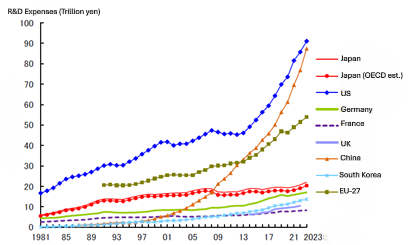
"Science and Technology Indicators 2025"
Since 2010, China has led the way in government spending on science and technology. Article 59 of the revised Law of the People's Republic of China on Scientific and Technological Progress obligates the Chinese government to ensure that the growth rate of its science and technology budget exceeds that of national budget revenue, stipulating that the science and technology budget must be gradually increased as a percentage of GDP. Despite these efforts, China's total R&D expenditure as a percentage of GDP is 2.58%, lower than the 3.45% in the United States and 3.42% in Japan, suggesting significant room for growth. In contrast, Japan's R&D expenditure has stayed roughly flat; yet, in the field of science and technology, staying flat means a year-by-year decline.
Total Science and Technology Budget Converted Using OECD Purchasing Power Parity Data
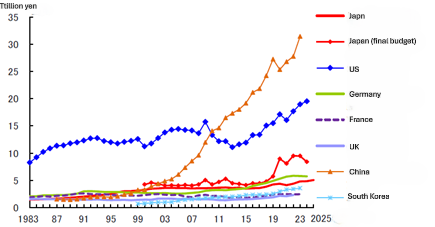
"Science and Technology Indicators 2025"
The Soaring Number of Chinese Researchers and Their Papers
Research and development is undertaken by researchers, and in China, their numbers have seen remarkable growth. Over the 20 years from 2002 to 2022, China nearly quadrupled its number of researchers. This rapid expansion set the stage for President Xi Jinping's announcement at the 20th National Congress of the Communist Party of China in October 2022: "China now ranks first in the world in total number of researchers." By 2023, their number exceeded 3 million, nearly double that of the United States. As an aside, the number of Chinese researchers decreased by about 400,000 between 2008 and 2009 due to the Chinese government adopting a stricter definition of a researcher, which aligns with the OECD's "Frascati Manual." Overall, China is now the world's largest supplier of highly skilled research talent.
| USA | China | Japan | |
|---|---|---|---|
| 2002 | 1,041,534 | 810,525 | 611,220 |
| 2007 | 1,088,186 | 1,423,381 | 671,816 |
| 2012 | 1,178,702 | 1,404,017 | 656,651 |
| 2017 | 1,329,747 | 1,740.442 | 665,566 |
| 2022 | 1,681,676 | 2,637,193 | 704,502 |
Crafted by the author based on "Science and Technology Indicators 2025."
The results of scientific and technological research are published in the form of research papers. China surpassed the United States in the number of research papers in 2018 (according to Scopus), and the gap has been widening year by year. Looking at the actual numbers of research papers published, China nearly doubled the number of those published by the United States between 2021 and 2023. Japan had been second only to the United States until 2003, but is now in fifth place.
Some Japanese researchers mistakenly believe that Chinese research papers are "numerous," but their "quality" is not so high. The "quality" of a paper is represented by the "citation rate," or the number of times that a particular paper is cited in other researchers' papers. China also leads the way in the number of "top 10% most cited papers," which are acknowledged as high-quality academic outputs.
| Total R&D Expenditure (2022) | Published Papers (2021-2023 average) | Top 10% Most Cited Papers (2021-2023 average) | |
|---|---|---|---|
| 1 | USA | China | China |
| 2 | China | USA | USA |
| 3 | Japan | India | UK |
| 4 | Germany | Germany | India |
| 5 | South Korea | Japan | Germany |
| 6 | UK | UK | Italy |
| 7 | France | Italy | Australia |
| 8 | South Korea | Canada | |
| 9 | France | South Korea | |
| 10 | Spain | Spain | |
| 11 | Canada | France | |
| 12 | Brazil | Iran | |
| 13 | Australia | Japan | |
| 14 | Iran | The Netherlands | |
| 15 | Turkey | Saudi Arabia |
Crafted by the author based on "Science and Technology Indicators 2025" (Counting the number of papers using the fractional method).
Japan ranks third in the world in total R&D expenditure, fifth in the number of published research papers, and thirteenth in the number of high-quality papers, behind Iran. In stark contrast to China's rapid progress, Japan's relative decline is notable. Japan's ranking in the number of papers (5th) and in that of high-quality papers (13th) suggests that Japanese research papers are published abundantly but often of inferior quality. Japan's third-place ranking in total R&D expenditure and fifth-place ranking in the number of published research papers strikingly suggest that there is something wrong with the allocation of R&D funding and research efficiency. It is general knowledge that the number of published research papers, innovation index, and GDP are positively correlated with R&D investment; in this sense, Japan is in a critical situation.
Scientific and Technological Capabilities of the United States and China as Shown by Other Indicators
There are many other indicators for measuring a nation's scientific and technological capabilities, which are the sources of innovation. In terms of the number of researchers who authored and published high-quality papers, the United States leads with 2,507, more than 1,000 ahead of second-place China, 1,405. However, researchers involved in research activities in the United States, the United Kingdom, Canada, and Australia include many researchers of Chinese ancestry; therefore, the total number of Chinese-origin researchers in these countries would reach an impressive figure. Incidentally, Japan is outside the top 10 ranking.
| Country | The Number of Researchers | |
|---|---|---|
| 1 | USA | 2507 |
| 2 | China | 1405 |
| 3 | UK | 563 |
| 4 | Germany | 332 |
| 5 | Australia | 313 |
| 6 | Canada | 206 |
| 7 | The Netherlands | 185 |
| 8 | Hong Kong | 134 |
| 9 | France | 126 |
| 10 | Singapore | 108 |
Clarivate : Highly Cited Researchers 2024
Other indicators include "World University Rankings," which focuses on top universities playing a major role in the global circulation of talent; the number of PCT applications, which reflects a nation's innovation capabilities; the performance and number of supercomputers produced and owned across the globe; the Unicorn Index, which tracks the performance of unlisted private companies valued at $1 billion or more; and the maturity of science and technology infrastructure, testified by, among other things, particle accelerators, telescopes, and undersea exploration vessels. Viewed from any of these indicators, China is now on par with or even surpasses the United States.
China's Breakthrough in Space Development
Space development capabilities are a barometer for measuring a country's scientific and technological strength; space development is the area where the scientific and technological conflict between the United States and China is fiercest. Space, once commended for peaceful uses, has now become a "war-fighting area" for security reasons, alongside cyberspace. Since the "Sputnik shock" of 1957, Russia (formerly the Soviet Union) has challenged US space dominance. In recent years, China has emerged as a close rival to the United States.
The United States and China are in a fierce competition to be the first to send a crew to the Moon in the 21st century. The United States landed Neil Armstrong and Buzz Aldrin on the surface of the Moon during the Apollo 11 mission in July 1969. However, no astronauts have reached the Earth's only natural satellite since the Apollo 17 mission in 1972. In March 2019, then-Vice President Mike Pence launched the Artemis program at the National Space Council, stating, "The first woman and the next man on the Moon will both be American astronauts, launched by American rockets, from American soil." In November 2022, the United States successfully completed Artemis I, an uncrewed Moon-orbiting mission employing the "Orion" spacecraft and Space Launch System (SLS) rocket. Artemis II, a crewed Moon-orbiting mission, is scheduled for April 2026 and will be followed by Artemis III, a crewed lunar exploration mission, in or after 2027.
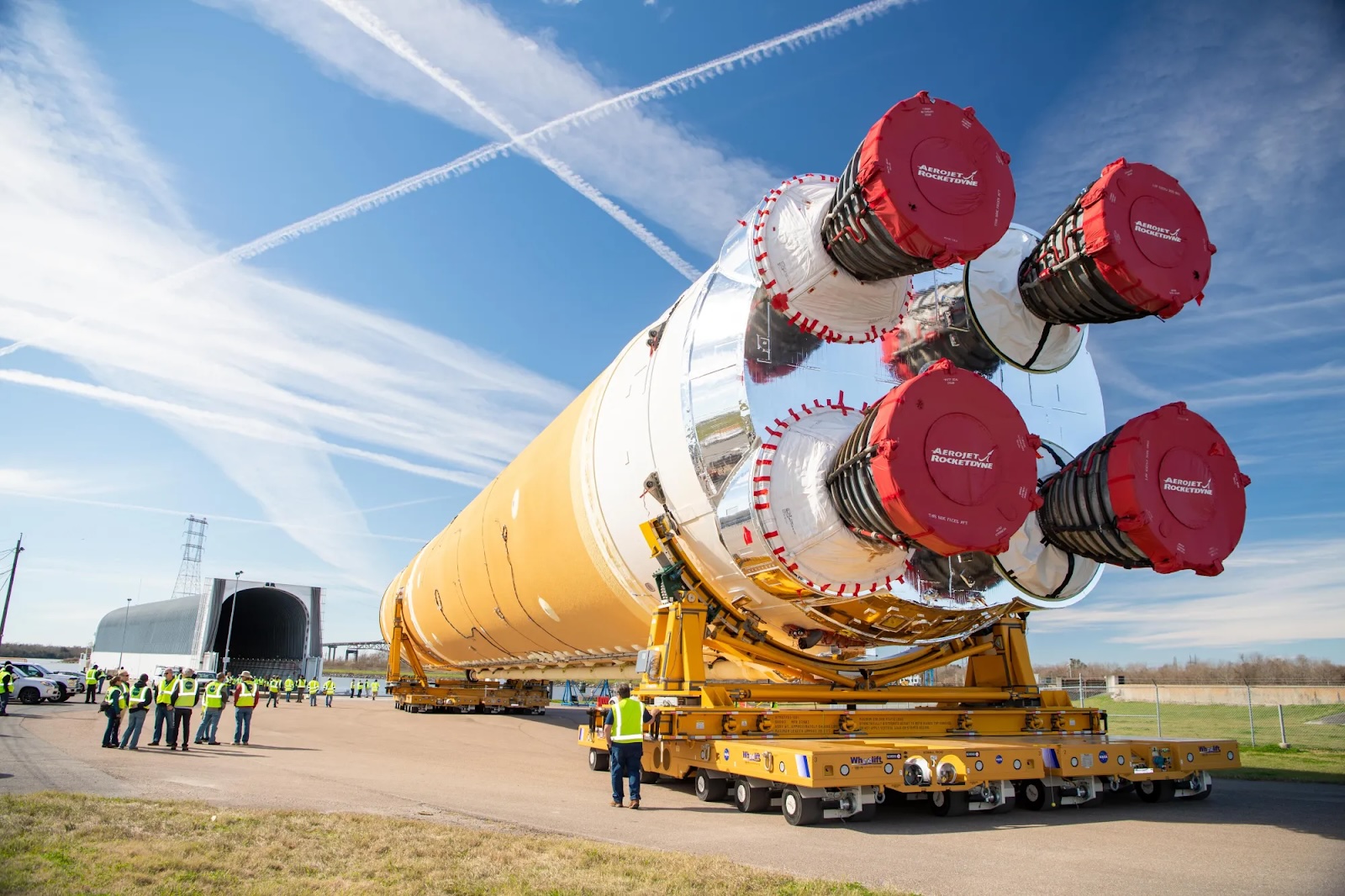
Space Launch System (SLS) Rocket ©NASA
China declared that it would send its astronauts to the Moon by 2030, and has been repeating ground tests with the "Chang Zheng" 10 rocket (a transport vehicle), the "Mengzhou" spacecraft, the "Lanyue" lunar lander, the "Wangyu" spacesuit, and the "Tansuo" lunar rover. In March 2025, Xinhua News Agency reported that the ground tests were "progressing smoothly." There is information circulating online that test flights of "Chang Zheng" 10 rockets Nos. 1-3 will be conducted in 2026, and a crewed lunar landing will be attempted in 2029 with Nos. 4-5.
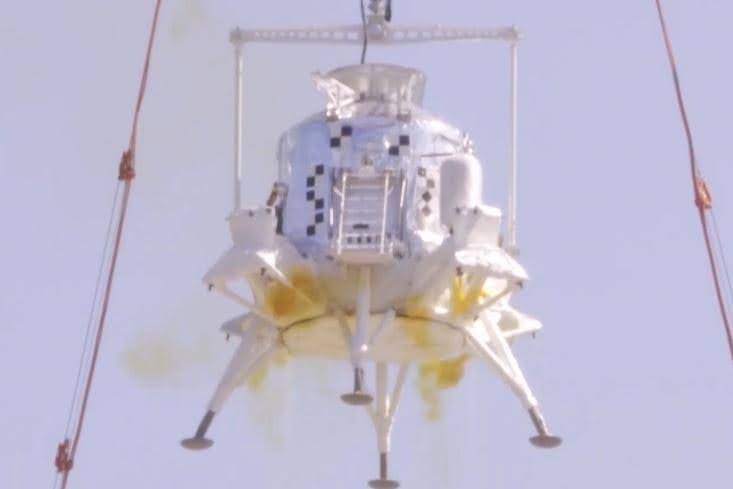
China's "Lanyue" Lunar Lander ©CLEP
China has been steadily exploring the Moon with its "Chang'e" program launched in 2004. In January 2019, "Chang'e 4" made the first successful soft landing on the far side of the Moon in human space history. In May 2024, "Chang'e 6" successfully returned samples from the lunar far side.
"Chang'e 7," scheduled for launch in 2026, is expected to return samples from the lunar south pole and to build a power generation facility on the lunar surface. Scientists believe that there is a "permanently shadowed region" at the lunar south pole where sunlight never reaches. They also believe that large amounts of water exist there. Not only is water essential to life of future Moon explorers. Water can also be split into hydrogen and oxygen using nuclear energy, which can then be used as an energy source. This has attracted keen interest from not only the United States and China, but also Europe, Japan, India, and Russia.
Currently, NASA remains in turmoil due to drastic budget cuts and a 20% staff turnover under Trump 2.0, which has also put the Artemis program behind schedule. The outcome of the race to send the first manned mission to the Moon in the 21st century is extremely uncertain.
Mars Exploration: The Battleground of the US-China Space Race
In 2021, the US "Perseverance" probe and China's "Tianwen-1" probe achieved a soft landing on Mars almost simultaneously. Unlike the Moon, Mars has a thin atmosphere, which could enable humans to migrate to the planet in the distant future. This possibility has sparked growing interest. The "Perseverance" successfully flew the small helicopter "Ingenuity" and also conducted a successful experiment to extract oxygen from the Martian atmosphere. The "Tianwen" deployed the Mars rover "Zhurong" to analyze the Martian surface soil.
The next mission is a sample return from Mars. The "Perseverance" has already collected samples on Mars and sealed them in capsules. All that remains is to retrieve them, but the retrieval plan has yet to be decided. Meanwhile, China has announced that it will return samples with the "Tianwen-3" in 2030; China is likely to outpace the United States in Mars exploration.
The United States and China are also engaged in fierce competition in every aspect of space development: low-orbit satellite constellations (Starlink of SpaceX vs. China's "Guowang"); GNSS constellations (GPS vs. "BeiDou"), and space stations (ISS vs. China's "Tiangong"). China plans to launch a successor to its quantum science satellite "Mozi," which will give the country an unrivaled advantage in unbreakable quantum satellite communications.
Nuclear Power Development and Artificial Intelligence
In the field of nuclear power development, China has risen to the second place with 57 commercial nuclear power plants, overtaking France's 56. The United States holds onto its top spot, operating 93 commercial nuclear power plants. However, China has 34 plants under construction and plans to build more than 20 additional ones. China is poised to become the world's largest nuclear power by 2035. Notable is the domestic 1-million-kilowatt-class nuclear reactor, "Hualong One," which is gaining ground in the international nuclear market, mainly through exports to Belt and Road Initiative countries.
In the R&D of nuclear reactors, there is an ongoing shift toward "Generation IV reactors," including "very high-temperature reactors," "supercritical pressure light water reactors," "molten salt reactors," "gas-cooled fast reactors," "lead-cooled fast reactors," and "sodium-cooled fast reactors." In the United States, private sector development of small modular reactors (SMRs) is progressing rapidly. But there are no plans to build large reactors with a capacity of 1 million kilowatts.
Artificial intelligence (AI) has the profoundest impact on human society. Released in November 2022, OpenAI's ChatGPT has quickly permeated various aspects of human lives. At present, large-scale language models (LLMs) are flourishing on a large scale. China's DeepSeek and Alibaba's Qwen are following the lead of Pioneer LLMs such as OpenAI's GPT, Google's Gemini, and Meta's LLaMA. In particular, DeepSeek attracted global attention for achieving performance comparable to ChatGPT with low specifications, low cost, and a small number of GPUs, despite the geopolitical disadvantage of US semiconductor export restrictions. As of this writing, the most notable LLMs are Kimi K2 and Manus from the Chinese AI venture Moonshot AI. Changes in the field of AI are extremely rapid and intense.
According to the 2024 Nature Index AI, China ranks first among countries in terms of the total number of AI-related publications from 2019 to 2023, followed by the United States in second place. China also far surpasses the United States in AI-related patents. According to the World Intellectual Property Organization (WIPO), a total of 54,000 patents of Generative AI were filed over the past decade: China led the way with 38,210 patents, followed by the United States with 6,276. Furthermore, according to Georgetown University's Center for Security and Emerging Technology (CSET), China is producing roughly half of all AI researchers. The United States and China are also competing in the field of "quantum science," which includes quantum computers, quantum communications, quantum sensors, and quantum materials.
When viewing sector by sector, China is on par with the United States in all areas except "medicine and biotechnology." Additionally, China holds a particular advantage in many of "emerging and foundational technologies" and "critical and foundational technologies," which are directly linked to national security.
The future of scientific and technological hegemony between the United States and China depends on Trump 2.0's science and technology policy. The Trump administration's budget proposal released in May 2025 was marked with significant reductions in science and technology-related budgets: a 56% year-on-year reduction for the National Science Foundation (NSF), a 37% cut for the National Institutes of Health (NIH), which supports medical research, and a 25% cut for NASA. As expected, the House and Senate Appropriations Committees submitted a bill requesting that the reduced budgets be restored to last year's levels, but the situation remains uncertain until the bill takes effect on October 1. If Trump's budget is implemented as proposed, China will likely overtake the United States also in the fields of medicine and biotechnology, where the United States currently holds an advantage.
Conclusion
Data clearly shows that China is on par with the United States in various fields of science and technology. In some areas, China is even surpassing the United States. I cannot predict whether a "Pax Sinica" will ever emerge. However, in this context, I believe that there are some essential elements for a country to achieve hegemony or leadership in science and technology: a "philosophy" for science and an "ideal" for science.
The achievements of science and technology are ultimately the assets of all humanity, because all the achievements of modern science are grounded upon the results of preceding research in the past. Scientific research should not serve the interests of a country striving to become a "superpower," but should be aimed at the "pursuit of truth" and the "welfare of humanity." I attended and listened to press conferences given by Japanese Nobel Prize winners on numerous occasions; they all unanimously emphasized the ultimate goals of science: "the importance of basic research" and "the pursuit of truth."
Examining China's current situation, which could be described as a "scientific revolution," reveals the remarkable achievements of the country and its researchers in various scientific and technological fields. However, when it comes to the question of whether China is appealing enough to attract top talent from around the world, the answer is a resounding no. I am concerned that even if the country offers favorable treatment and a favorable research environment to an invited foreign researcher, these factors alone are not enough to dispel concerns such as whether "freedom of research" will be guaranteed under the "Overall National Security Outlook," whether research content and actions will be subject to surveillance, and whether research results will be used for China's national security purposes under the "military-civil fusion" strategy.
To attract world-class talent, isn't it essential for China to become a respected scientific and technological power?
(Haruo Kurasawa, Science Journalist)
Sources
- CSIS (2025/7/30), "The United States Cannot Win the Twenty-First-Century Innovation Race with a Twentieth-Century Playbook." https://www.csis.org/analysis/united-states-cannot-win-twenty-first-century-innovation-race-twentieth-century-playbook
- ITIF (2024/9/16), "China Is Rapidly Becoming a Leading Innovator in Advanced Industries." https://itif.org/publications/2024/09/16/china-is-rapidly-becoming-a-leading-innovator-in-advanced-industries/
- ASPI(2024/8/24), "ASPI's two-decade Critical Technology Tracker: The rewards of long-term research investment." https://www.aspi.org.au/report/aspis-two-decade-critical-technology-tracker/
- Law of the People's Republic of China on Scientific and Technological Progress (Japanese translation) https://www.jetro.go.jp/ext_images/world/asia/cn/ip/law/pdf/regulation/20071229.pdf
- Research Power Rankings "Nature Index 2025" https://www.nature.com/nature-index/
- Highly Cited Researchers Ranking Clarivate : Highly Cited Researchers https://clarivate.com/highly-cited-researchers/
- World University Rankings Times Higher Education, World University Rankings https://www.timeshighereducation.com/world-university-rankings
- QS World University Rankings https://www.topuniversities.com/qs-world-university-rankings
- The World Intellectual Property Organization (WIPO) and PCT Applications https://www.wipo.int/edocs/pubdocs/en/wipo-pub-901-2025-en-patent-cooperation-treaty-yearly-review-2025.pdf
- The TOP500 List of Supercomputers https://top500.org/lists/top500/
- The Complete List Of Unicorn Companies https://www.cbinsights.com/research-unicorn-companies
- The World Intellectual Property Organization (WIPO) and Patent Landscape Report―Generative Artificial Intelligence https://www.wipo.int/web-publications/patent-landscape-report-generative-artificial-intelligence-genai/en/index.html
Reference
Nagayasu Toyoda, The Crisis of a Science-Based Nation: Japan's Stalling Research Capabilities, Toyo Keizai Shinposha, 2019.
- May, 2026, "Religious Resurgence and Trump 2.0: Kirk's Legacy, University Control, and Immigration Management" by Yoshiyuki Kato, Professor, Rikkyo University
- May, 2026, "The Founding of America and Conspiracy Theories" by Tsuyoshi Kamimura, Associate Professor, Kwansei Gakuin University
- May, 2026, "Latin American Diplomacy under Trump 2.0: The Scope and Effectiveness of the "Western Hemisphere" Policy" by Suguru Osawa, Associate Professor, Aichi Gakuin University
- April, 2026, "Is Trump 2.0's Foreign and Security Policy Strategic?" by Tsuneo Watanabe, Senior Fellow, The Sasakawa Peace Foundation
- April, 2026, "The Trump Tariffs and Its Ramifications" by Yorizumi Watanabe, Professor Emeritus, Keio University
- April, 2026, "Donald Trump's Vision of the State and the Separation of Powers: An Analysis of His Tariff Policy" by Takeshi Umekawa, Professor, The University of Tokyo
- March, 2026, " Has U.S.–China Competition Eased under Trump 2.0? " by Ryo Sahashi, Professor, The University of Tokyo
- March, 2026, "Economic Security Under Trump 2.0 : A Shift in Values and Changing Options " by Kousuke Saitou, Professor, Sophia University
- March, 2026, " The Trump Administration's Economic Policies and the U.S. Economy: Risks Emerging in the U.S. Economy Amid Strong Equity Market and Economic Growth " by Masaharu Takenaka, Professor, Ryukoku University
- February, 2026, "The Impact of Russia-North Korea Military Cooperation on Regional Security" by Narushige Michishita, Vice President, National Graduate Institute for Policy Studies
- February, 2026, "The Sino-Russian Strategic Partnership and Japan's Security: Future Trajectories and Implications" by Shinji Yamaguchi, Senior Fellow, National Institute for Defense Studies
- February, 2026, "A Perspective on Russia's National Security Strategy: Focusing on the ‘Multipolar World,' ‘Anti-Westernism,' and ‘Nuclear Status'" by Shinji Hyodo, Vice President for Academic Affairs, National Institute for Defense Studies
- February, 2026, "The Possible Revival of "Imperial Russia" and What It Means for Asia and Japan" by Akio Kawato , Former DCM, Embassy of Japan in Russia
- February, 2026, "Russia After the Ukraine War: A Challenge to Japanese Security Strategy" by Matake Kamiya, Professor, The National Defense Academy
- January, 2026, "The Future of US-Russia Relations under Trump 2.0: Implications for Japan" by Taisuke ABIRU, Senior Research Fellow, the Sasakawa Peace Foundation
- January, 2026, "Hybrid Warfare Transformed Amidst the Ukraine War: Russian Tactics and the Global Diffusion of Threat" by Yoko HIROSE, Professor, Keio University
- October, 2025, "The End of Pax Americana and the Rise of China" by Nobuhiko Tamaki, Ph.D. Professor, Chuo University
- October, 2025, "China's "Kill ‘Three' Birds with One Stone" Approach to Deep-Seabed Resource Development" by Chisako Masuo, Professor, Kyushu University
- October, 2025, "Geopolitics of Science and Technology: China's Scientific Revolution vs. Trump 2.0" by Haruo Kurasawa, Science Journalist
- October, 2025, "China's Strategic Gains and Losses from the Ukraine and Middle Eastern Conflicts and Its Military Partnership with Russia" by Masafumi Iida, Director, Security Studies Department, The National Institute for Defense Studies
- October, 2025, "Medium- to Long-Term Prospects of the Chinese Economy" by Toshiya Tsugami, Director, Tsugami Toshiya's Works
- October, 2025, "China's Military Power as It Celebrates Its Centennial " by Bonji Ohara, Founder & Rep. Director, DEEP DIVE
- October, 2025, ""Pax China" from the Global South's Perspective" by Shin Kawashima, Professor, The University of Tokyo
- July, 2025, "What Makes Modi 3.0 Distinct and a Future Outlook" by Toru Ito, Professor, The National Defense Academy
- July, 2025, "Mid- to Long-Term Outlook for the Indian Economy: How to Assess the Indian Market―Benefits and Challenges of Japan-India Collaboration" by Go Yamada, Principal Economist, Japan Center for Economic Research
- July, 2025, "The India-China Border Issue and India's Military Strategy" by Satoru Nagao, Research Fellow, Hudson Institute
- July, 2025, "Where the India-Pakistan Conflict Is Headed" by Satoru Nagao, Research Fellow, Hudson Institute
- July, 2025, "India, a Leader in the Global South - What Is It Really Like?" by Tomoko Kiyota, Associate Professor, Nagasaki University
- July, 2025, "India's Diplomacy with the United States and Russia" by Mari Izuyama, Chief Research Fellow, National Institute for Defense Studies
- July, 2025, "Japan-India Security Cooperation in India's Grand Strategy" by Kazutoshi Tamari,Professor, Chukyo University
- July, 2025, "What's Next for Japan-India Strategic Partnership" by Kenji Hiramatsu, Former Ambassador to India
- April, 2025, "Outlook for the US Economy: Whether the "Golden Age" Is Beginning?" by Akihiko Yasui Director, Mizuho Research & Technologies, Ltd.
- April, 2025, "China's Economy Facing Internal and External Challenges" by Osamu Tanaka,Visiting Professor, Takushoku University
- April, 2025, "The Role of the Private Sector in Economic Security: Reflections from Japan-US and Public-Private Relations Perspectives" by Kohei Takeda Research Associate, Weatherhead Center for International Affairs at Harvard University
- April, 2025, "Proposal for Strengthening the Competitiveness of Japan's Defense Industry: Shift from the "Family Type" to the "Strategic Keiretsu-Type" System" by Yuzo Murayama Professor Emeritus, Doshisha University
- April, 2025, "Considering Economic Security Focusing on Food and Energy Security" by Takashi Sekiyama Professor, Kyoto University
- March, 2025, "An Outlook for the Japanese Economy" by Takao Komine, Visiting Professor, Taisho University.
- March, 2025, "Considering Social Security and Tax Reforms: What Will Become of Japan's Fiscal Reconstruction?" by Kazumasa Oguro, Professor, Hosei University.
- March, 2025, "Progress in Economic Security Policies and Further Strengthening of National Security Policy Integration Amid the Acceleration of "Securitization"" by Nobushige Takamizawa, Visiting Professor, The University of Tokyo.
- March, 2025, "From Economic Security to Geoeconomics" by Kazuto Suzuki, Professor, The University of Tokyo.
- January, 2025, "Healthcare Policy in the Second Trump Administration" by Takakazu Yamagishi Professor, Nanzan University.
- January, 2025, "Foreign and Security Policies of the Second Trump Administration" by Yuki Tatsumi Senior Fellow at the Stimson Center.
- January, 2025, "The Second Trump Administration and Japan-US Relations: Viewed by a Former Practitioner of Diplomacy" by Koji Tomita Former Ambassador to the United States.
- January, 2025, "The "FEAR" Returned: The Meaning of Trump's Reinstatement" by Koji Murata Professor, Doshisha University.
- December, 2024, "Analysis of the Trump Vote in the 2024 U.S. Presidential Election" by Takeshi Iida Professor, Doshisha University.
- December, 2024, "Trump's Victory Factors: Why Trump Wanted to Be President Again" byTsuneo Watanabe Senior Fellow, the Sasakawa Peace Foundation.
- December, 2024, "Kamala Harris and Factors Behind Her Defeat:Can the Democrats Make a Comeback?" by Masahito Watanabe Professor, Keio University.
- December, 2024, "American Democracy and Society Viewed from an Analysis of the 2024 US Presidential Election" by Takayuki Nishiyama Professor, Seikei University.
- October, 2024, "Assessment of Russia's Military Strength, Stockpiles, and Defense Production Base: Evaluating Russia's Capability to Continue Warfare" by Yu Koizumi, Associate Professor for RCAST, The University of Tokyo.
- October, 2024, "Germany's Arms Assistance for Ukraine: Has Its Culture of Self-Restraint Been Overcome?" by Norihide Miyoshi who served for The Japan News).
- October, 2024, "Russia's War Costs: Military Expenditures and Resource Allocation in "Wartime"" by Miho Okada, Professor, National Defense Academy.
- October, 2024, "Assessment of Russia's Military Strength, Stockpiles, and Defense Production Base: Evaluating Russia's Capability to Continue Warfare" by Yu Koizumi, Associate Professor for RCAST, The University of Tokyo.
- October, 2024, "Economic Sanctions and the Russian Economy" by Makoto Onozuka,Research Manager, Japan External Trade Organization.
- October, 2024, "Russia's Prolonged Military Invasion of Ukraine and Ukrainian Public Opinion: Focusing on Perceptions of Negotiations, Territory, and Sovereignty" by Tsuyoshi Goroku Associate Professor, Nishogakusha University.
- September, 2024, " The Russia-Ukraine War Viewed from War Termination Theory" by Yasuaki Chijiwa Chief Research Fellow, National Institute for Defense Studies.
- September, 2024, " How the Winter War Ended: A "Compromised Peace" Ends the Ukraine War?" by Tomoyuki Hanada Chief Research Fellow, National Institute for Defense Studies.
- September, 2024, " The End of the Soviet-Afghan War" by Takeshi Yuasa Professor, Sophia University Professor, Sophia University.
- July, 2024, " The Yoon Suk-yeol Administration and the ROK-Japan Relations" by CHOI, EunmiJ, The Asan Institute for Policy Studies, Research Fellow.
- July, 2024, " The 22nd National Assembly Election and South Korean Politics " by Hideki Okuzono, Professor, University of Shizuoka.
- July, 2024, " South Korea's Economic Security Policy and New Japan-ROK Economic Cooperation" by Satoru Okuda, Professor, Asia University.
- July, 2024, " Japan-ROK Cooperation: Not an Option but a Must" by Chey Tae-won, Chairman and CEO SK Inc.
- July, 2024, "Examining the Yoon Administration's Foreign Policy over the Past Two Years " by Junya Nishino, Professor, Keio University
- July, 2024, "North and South Korea Enter a New Phase of Competition" by Narushige Michishita, Executive Vice President and Professor at the GRIPS.
- July, 2024, "The Camp David Summit and U.S.-Japan-ROK Security Cooperation" by Yasuyo Sakata.
- April, 2024, "The Middle East Question and Japan" by Sinan Levent, Professor, Ankara University
- April, 2024, "The Israel-Hamas War and the Disruption of the Rules-Based International Order-Viewed from Theories of International Politics-" by Matake Kamiya, Professor, National Defense Academy of Japan
- March, 2024, " Regional Political Dynamics in the Middle East - Factors Changed and Remained unchanged after the October 7th Incident-" by Amane Kobayashi, Senior Researcher, the Institute of Energy Economics, Japan
- March, 2024, "The Ukraine War and Russia's Changing Middle East Diplomacy " by Taisuke Abiru, ,Senior Research Fellow, the Sasakawa Peace Foundation
- March, 2024, "Superpowers' Engagement with the Middle East and Their Intentions " (Edited lecture transcript) by Koichiro Tanaka, Professor, Keio University
- March, 2024, " Why the Israel-Hamas War Broke Out?" by Hiroyuki Suzuki, Professor, Associate Professor, The University of Tokyo
- March, 2024, " The Middle East Peace Process-Its Development and Future " by Chie Ezaki, Associate Professor, National Defense Academy of Japan
- March, 2024, "The Origin and Prospects of the Question of Palestine -Transformation of Israeli Politics and "10/7" as a Boiling Point- " by Aiko Nishikida, Professor, Keio University
- January, 2024, "Indonesia's Global South Diplomacy and Its Impact on Domestic Politics" by Jun Honna, Professor, Ritsumeikan University
- January, 2024, "Brazilian Foreign Policy and the Global South" by Hiroyuki Urabe, Professor, Dokkyo University
- January, 2024, "Africa's Population Explosion:How the "Last Frontier" Will Change the World" by Keiichi Shirato, Professor, Ritsumeikan University
- January, 2024, "The Impact of PM Modi's Global South Policy on the Military Strategy of India" by Satoru Nagao, Research Fellow, Hudson Institute
- December, 2023, "The Global South Concept and Its Historical Development and Outlook" by Ken Jimbo, Professor, Keio University
- December, 2023, "India's Global South Diplomacy and Japan" by Toru Ito, Professor, National Defense Academy
- December, 2023, "The Global South Viewed from China's Perspective" by Shin Kawashima, Professor, the University of Tokyo
- October, 2023, " Political and Social Divide in the United States and Challenges for Democracy" by Kazuhiro Maeshima, Professor, Sophia University
- October, 2023, " Has US Foreign Policy Doctrine Changed? " by Tsuneo Watanabe, senior Fellow, Sasakawa Peace Foundation
- October, 2023, " America's Journey to Hegemony and Its Challenges" by Koji Murata, Professor, Doshisha University
- September, 2023, " A Medium- to Long-Term Outlook for the US Economy―Can America Win the Competition with China?―" by Tatsuhiko Yoshizaki, Chief Economist, Sojitz Research Institute, Ltd.
- September, 2023, " China's Strategy toward the U.S " by Toshiya Tsugami, Adjunct Researcher, the Japan Institute of International Affairs
- September, 2023, " The Deepening Security Dilemma in US-China Relations " by Ryo Sahashi, Associate Professor, the University of Tokyo
- July, 2023, "How Would North Korea and China Use Nuclear Weapons? -- Scenarios for Discussion" by Narushige Michishita, Professor at the National Graduate Institute for Policy Studies
- July, 2023, "Japan's Nuclear Strategy" by Nobukatsu Kanehara, Visiting Professor at Doshisha University
- July, 2023, "G7 Hiroshima Summit and Efforts for a Safer World Without Nuclear Weapons" by Nobushige Takamizawa, Visiting Professor at the University of Tokyo
- July, 2023, "Roundtable Discussion—Let's Talk Frankly About Nuclear Issues" by SSDP Discussion Members
- June, 2023, "Exploring the Possibility of Nuclear Attacks on Japan-Nuclear Simulations in the Era of "Three-Front Nuclear Threats" by Hiroyasu Akutsu, Professor, Heisei International University
- June, 2023, "China's Aim to Become a Nuclear Superpower" by Masafumi Iida, Head of China Division at the National Institute for Defense Studies
- June, 2023, "Challenges for Nuclear Arms Control in the Era of Strategic Competition Among Major Powers" by Nobumasa Akiyama, Professor, Hitotsubashi University
- June, 2023, "Mechanisms and Functions of Nuclear Deterrence-Development of US Nuclear Strategic Theory" by Masashi Murano, Research Fellow of Hudson Institute
- April 2023, "Changing NATO's "Achilles Heel"—Security in the Baltic Region" by Sanshiro Hosaka, Fellow,The International Centre for Defence and Security, Estonia
- April 2023, Evolution of European Security System - Visualization of Deterrence by NATO and the "Russian Problem" by Michito Tsuruoka, Associate Professor, Keio University
- April 2023, "An Expanded NATO's Nuclear Strategy" by Yoko Iwama
- March, 2023, "Germany's Civilian Power Model—Modification or Termination?--Germany Struggling with the War in Ukraine" by Toshiya Nakamura, Professor, Nagoya University
- March, 2023, "France and the Ukraine War―The Logic Behind Macron's Security Policy" by Ken Endo, Professor, The University of Tokyo
- March, 2023, "The Russo-Ukrainian War and the British Response: 2014-2023" by Yuichi Hosoya, Professor, Keio University
- March, 2023, "Where is America Heading—Implications and Challenges for the Allies" by Koji Murata, Professor, Doshisha University
-
December 2022, Proposal "Defending Our Country – Defense Policy in a New Cold War Era" was announced
- Front Cover
- Changes in the Security Environment Surrounding Japan - Shifting Power Balance and the Three Front Threats Ken Jimbo
- How Will "Japan Contingencies" Emerge? Osamu Onoda
- The Japan-US Alliance Revisited: Is it Dependable? Chikako Kawakatsu Ueki
- A New Phase of Defense Diplomacy and Defense Production and Technology Base Ippeita Nishida, Tsuneo Watanabe
- Intelligence Activities in the Post-Ukraine War Era Jun Nagashima
- Responding to the Nuclear Threat Masashi Murano
- No Time to Lose for Improving Japan's Defense Capabilities - Can the JSDF Defend the Homeland? - Ryoichi Oriki
- Toward the Formulation of a New "National Security Strategy" Hideshi Tokuchi
- October 2022, "Japan-China Relations under the Long-term Administration of Xi Jinping: Current Status, Prospects, and Expectations" written by Kazuyuki Suwa, Professor, University of Shizuoka
- October 2022, "China's Policy on the Global South --- China's World View and the Configuration of the US-China Confrontation " written by Shin Kawashima, Professor, the University of Tokyo
- October 2022, "Military Strategy of Xi Jinping's China" written by Bonji Ohara, Senior Fellow, Sasagawa Peace Foundation
- September 2022, " Social Governance by the Communist Party of China: The Present State and the Future Prospects " written by Kazuko Kojima, Professor, Keio University
- September 2022, "The Relationship between Domestic Politics and Diplomacy under the Xi Jinping Administration- Why Were the Large-Scale Military Exercises Decided?" written by Chisako T. Masuo, Professor, Kyushu University
- September 2022, "Xi Jinping's China--- Prospects for Its Climate Change Policy ---" written by Takashi Sekiyama, Associate Professor, The University of Kyoto
- August 2022, " Current Assessment of the Xi Jinping's Rule and Prospects for the Third Term of the Xi Administration " written by Takashi Suzuki, Associate Professor, Aichi Prefectural University
- August 2022, " Economic Challenges Awaiting the Xi Jinping Administration As it Enters its Third Term" written by Toshiya Tsugami, Director, Tsugami Toshiya's Works
- July 2022, "The Russian Invasion of Ukraine and the Future International Legal Order" written by Masahiro Kurosaki, Associate Professor, National Defense Academy
- July 2022, "The Ukraine War and Security in East Asia" written by Narushige Michishita, Vice President, National Graduate Institute for Policy Studies
- July 2022, "How Will the Ukraine War Change the New US-China Cold War?" written by Yasuhiro Matsuda, Professor, the University of Tokyo
- July 2022, "Impact of the Ukraine War on the Global Economy" written by Tatsuhiko Yoshizaki, Chief Economist, Sojitz Research Institute, Ltd.
- June 2022, "Why War Occurs in Europe?--The Structural Transformation of the European Security Order in the Post-Cold War Era --" written by Yuichi Hosoya, Professor, Keio University
- June 2022,"The Russia-Ukrainian War and the Behind-the-Scenes Stance of the United States" "On Economic Security" written by Tsuneo Watanabe, Senior Fellow, Sasakawa Peace Foundation
- June 2022, "The Russia-Ukraine War and NATO", written by Michito Tsuruoka, Associate Professor, Keio University
- June 2022, "The Ukrainian War Viewed from Theories of International Politics" written by Matake Kamiya, Professor, National Defens Academy
- March 2022, "Economic Security Challenges and Cyber Security" written by Jun Osawa, Senior Research Fellow, Nakasone Peace Institute
- March 2022, "On Economic Security" written by Matake Kamiya, Professor, the Ntional Defense Academy
- March 2022, ""Economic Security" and the Review of the 2013 NSS and the Related Strategy Documents" written by Nobushige Takamizawa, Visiting Professor, the University of Tokyo
- March 2022, "The US-China Rivalry and Economic Security" written by Yuzo Murayama, Professor, Doshisya University
- March 2022, "Japan's National Security Policies and Science and Technology" written by Nobukatsu Kanehara, Professor, Doshisya University
- March 2022, "Economic Security in the Free Trade Regime" written by Kazuto Suzuki, Professor, the University of Tokyo
- January 2022, "The 2022 South Korean Presidential Election and the Next Administration's Foreign and Security Policy" written by Junya Nishino, Professor, Keio University
- January 2022, "North Korea's Nuclear and Missile Development and Japan's Defense" written by Hideshi Tokuchi, Senior Fellow, GRIPS
- January 2022, "What will Become of Japan-South Korea Relations? The 1965 Japan-South Korea Treaty System in Jeopardy" written by Masao Okonogi, Professor Emeritus, Keio University
- December 2021, "Economic and Social Conditions in North Korea and its Relations with South Korea" written by Mitsuhiro Mimura, Chief Research Fellow, The Economic Research Institute for Northeast Asia.
- December 2021, "China's Korean Peninsula Policy and North Korea" written by Shin Kawashima, Professor, the University of Tokyo.
- December 2021, "China's Korean Peninsula Policy and North Korea" written by Shunji Hiraiwa, Professor, Nanzan University.
- December 2021, "What to Do with the Relations with North Korea?" written by Hitoshi Tanaka, Chairman for Institute for International Strategy at the Japan Research Institute.
- October 2021, "Strategic Implications of North Korea's Enhanced Nuclear and Missile Capabilities" written by Narushige Michishita, Vice President, National Graduate Institute for Policy Studies.
- October 2021, "The Biden Administration's North Korea Policy: Its Low Priority and Looming Crises" written by Tsuneo Watanabe, Senior Fellow, Sasakawa Peace Foundation.
- October 2021, "The Evolution of the US-ROK Alliance: Tasks in the Biden Era" written by Yasuyo Sakata, Professor, Kanda University of International Studies.
- September 2021, "The Development of Regional Security Architecture: From Asia-Pacific to Indo-Pacific" written by Ken Jimbo, Professor, Keio University.
- September 2021, "The Strategic Development of Japanese Security Cooperation under Superpower Competition and the Development of the FOIP and its Operationalization" written by Nobushige Takamizawa, Visiting Professor, Graduate School of Public Policy, The University of Tokyo.
- August 2021, "Security Perceptions of Central Asian Countries--- From the Perspective of China Studies ---" written by Shin Kawashima, Professor, the University of Tokyo.
- August 2021, "Security in the Indian Ocean Region---Implication of the Galwan Incident for QUAD in the Indo-Pacific" written by Dr. Satoru Nagao, Fellow (Non-Resident), Hudson Institute.
- August 2021, "Easternization and Security in Asia" written by Tsuneo Watanabe, Senior Fellow, Sasakawa Peace Foundation.
- July 2021, "The Ideas of "Autonomy" and "Self-Reliance" in Contemporary India's Foreign Strategy" written by Kazutoshi TAMARI, Associate Professor,Chukyo University.
- July 2021, "Thailand's Security Policies and Threat Perceptions" written by Saya Kiba, Associate Professor, Komatsu University, Faculty of Intercultural Communication.
- July 2021, "Myanmar's Security Perceptions and the February 1 Coup d'Etat" written by Yoshihiro Nakanishi, Associate Professor, Kyoto University.
- July 2021, "Australia's Security Perceptions and the "Asia Threat"" written byTomohiko Satake, Senior Fellow, Defense Policy Division, Policy Studies Department, NIDS .
- June 2021, "The Indo-Pacific Regional Architecture: Its Future--- Multipolar Order Beyond US-China Relations ---" by Tsutomu Kikuchi, Professor, Aoyama Gakuin University
- June 2021, "The Quad Plus in the Security of Asia: Its Significance and Outlook" by Hideshi Tokuchi, Senior Fellow, National Graduate Institute for Policy Studies
- June 2021, "Indonesian Views and Perceptions on National Security" by Nobuhiro Aizawa, Associate Professor, The Graduate School of Social and Cultural Studies, Kyushu University
- June 2021, "Normalized Tensions in the Cross-Strait Relations--- Structural Changes in Taiwanese Society and the Xi Jinping Administration's Strategic Shift ---" by Yasuhiro Matsuda, Professor, The University of Tokyo
- June 2021, "China's Maritime Strategy and Responses of the United States and Japan" by Yoji Koda, Former Commander in Chief, Self Defense Fleet
- June 2021, "The South China Issues from the Perspective of the International Law Order",by Shigeki Sakamoto, Emeritus Professor, Kobe University
- May 2021, "Indonesian Views and Perceptions on National Security" by Nobuhiro Aizawa, Associate Professor, Kyushu University
- May, 2021, "The Philippine Foreign and Security Policy Perspective" written by Yusuke Takagi Associate Professor,National Graduate Institute for Policy Studies.
- May, 2021, "Vietnam's Security: Challenges and Responses" written by Tomotaka Shoji Head, Asia and Africa Division, Regional Studies Department, National Institute for Defense Studies
- March, 2021, "Can the Biden Administration Restore America as a Global Leader?" written by Matake Kamiya, Professor, the National Defense Academy of Japan.
- March, 2021, "The Biden Administration and Japan's Security Strategy" written by Hideshi Tokuchi, Senior Fellow, National Graduate Institute for Policy Studies.
- February,2021, "US Foreign and Security Policy Direction Viewed from the Biden Administration's Lineup" written by Tsuneo Watanabe, Senior Fellow, Sasakawa Peace Foundation
- February,2021, "Trade Policies of the Biden Administration" written by Takaaki Asano, Senior Analyst, Sumitomo Corporation Global Research Co. Ltd.
- February,2021, "The Biden Administration's Policy toward Russia" written by Taisuke Abiru, Senior Fellow, Sasakawa Peace Foundation
- January,2021, "Will US Policy Toward China Change?" lectured by Ryo Sahashi, Associate Professor, the University of Tokyo
- January,2021, "How will China View the Biden Administration?" written by Bonji Ohara, Senior Fellow, Sasakawa Peace Foundation
- January,2021, "An Assessment of the 2020 US Presidential Election-American Democracy Now-" lectured by Fumiaki Kubo, Professor, the University of Tokyo
- January,2021, "Two Trumpian Mysteries-Why did Trump win over 70 million votes? Why is his outrageous behavior unchecked?-" lectured by Kazuhiro Maeshima, Professor, Sophia University
- September, 2020, "The Novel Coronavirus (COVID-19) Pandemic and Internationa Relationsl" by Matake Kamiya, Professor, National Defense Academy of Japan
- September, 2020, "The Policy Agenda for the Xi Jinping Administration- COVID-19 Countermeasures and China's International Relations -" by Shin Kawashima, Professor, The University of Tokyo
- "Control in the United States and International Relations" by Koji Murata, Professor, Doshisha University
- September, 2020, "The EU's Response to COVID-19 and International Relations" by Yuichi Hosoya, Professor, Keio University
- August, 2020, "The Corona Crisis Seen from a Macroeconomic Perspective" written by Motoshige Itoh, Professor Emeritus, The University of Tokyo
- August, 2020, "The Coronavirus Pandemic and Japan's Infectious Disease Control" written by Takashi Mihara, Senior Research Fellow, NLI Research Institute
- August, 2020, "Infectious Disease Crisis Control in Japan- Recommendations on an Exit Strategy -" written by Kazumasa Oguro, Professor, Hosei University
- August, 2020, "Security against Infectious Disease Threats --- Policy Responses Abroad" written by Takashi Sekiyama, Associate Professor, Kyoto University
- June 2020,"Transformation of the International Order in the Middle East--- Varying Degrees of "Stateness" and Three Directions of the New Order" written by Satoshi Ikeuchi, Professor, Research Center for Advanced Science and Technology, The University of Tokyo
- June 2020,"Destabilization in the Middle East and its Impacts on Japan's Energy Security" written by Amane Kobayashi, Research Fellow, The Institute of Energy Economics
- May 2020: Urgent Recommendations "Toward a V-shaped Recovery after the Novel Coronavirus Pandemic "Coronavirus Testing for All" --- the First Step of the Next Phase"
- May 2020: "US Diplomacy toward Iran: Economic Sanctions as a Diplomatic Tool" Hiroki Sugita Columnist, Kyodo News
- "Russian Factors in the Middle East" Taisuke Abiru Senior Research Fellow, Sasakawa Peace Foundation
- "The SDF Dispatches to the Middle East --- History and Significance" Ippeita Nishida Senior Research Fellow, Sasakawa Peace Foundation
- March 2020, "Space and Security" Kazuto Suzuki Professor, Hokkaido University
- March 2020, "The US Security Space Policy --- With a Focus on the Establishment of Two Space Forces" Yasuhito Fukushima Chief Researcher, The National Institute for Defense Studies
- March 2020, "China's Recent Activities in Space and Cyberspace" Bonji Ohara Senior Research Fellow, Sasakawa Peace Foundation
- March 2020, "Environmental Security and Japan" Takashi Sekiyama Associate Professor, Kyoto University
- March 2020, "Changes in Global Environment and Security --- US Security Strategy" Hideshi Tokuchi Senior Fellow, National Graduate Institute for Policy Studies (GRIPS)
- February 2020, "Cyberspace Security" Motohiro Tsuchiya Professor, Keio University
- February 2020, "Japan's Space and Cyberspace Policy" Yukinari Hirose Former President of the National Institute for Defense Studies
- December 2019, "The US-China Confrontation --- Where Will Hegemony Reside Next?" Akio Takahara Professor, the University of Tokyo
- December 2019, "Challenges Facing the Chinese Economy" Osamu Tanaka Chief Senior Researcher, Institute of Developing Economies, JETRO
- December 2019, "US Strategic Perception on China: Implications for US Allied Partners" Tsuneo Watanabe Senior Fellow, Sasakawa Peace Foundation
- November 2019, "The Xi Jinping Administration's View of the International Order– China's emphasis on United Nations diplomacy and liberal economic policies−" Shin Kawashima, Professor, the University of Tokyo
- November 2019, "The Future of China's Security Strategy" Hideshi Tokuchi, Senior Fellow, National Graduate Institute for Policy Studies
- November 2019, "China --- Its Confidence and Anxiety" Bonji Ohara, Senior Research Fellow, Sasakawa Peace Foundation
- August 2019: Several Perspectives on the Korean Peninsula Issue--- The Deteriorating Japan-South Korea Relationship and the Uncertain Denuclearization of North Korea --- By Masahiro Akiyama Chairman, the SSDP
- July 2019, "An Outlook on the Denuclearization of North Korea--- What is the Stance of North Korea?---", Junya Nishino, Professor, Keio University
- July 2019, "An Outlook on the Denuclearization of North Korea --- How will the US move?", Narushige Michishita, Vice President, National Graduate Institute for Policy Studies
- July 2019, "Discussion on Denuclearization of North Korea", SSDP Discussion Meeting on May 8, 2019
- May 2019: "Current Status and Prospects of South Korea and Japan's Frictions over History: How to address the Judicial Problems", Masao Okonogi, Professor Emeritus, Keio University
- May 2019: "South Korea and Japan's Frictions over History" (Comments), Junya Nishino, Professor, Keio University
- May 2019: Japan and South Korea Relationships (Question & Answer)
- March 2019: "The Present State and Prospects of the Indian Economy and Economic Policies" written by Koji Kobayashi, Senior Economist Mizuho Research Institute Ltd.
- March 2019: "The "Modi diplomacy" in the History of Indian diplomacy--- Departure from or maintenance of the traditional diplomacy? ---" written by Toru Ito, The National Defense Academy of Japan
- February 2019: Dynamics of Indian Politics and the 2019 General Elections, written by Chiharu Takenaka, Professor of Rikkyo University
- February 2019: "Cooperative Strategy" to Realize "Competitive Strategy"--- The composite structure of Japan's "Free and Open Indo-Pacific" strategy (vision) ---, written by Matake Kamiya, Professor at The National Defense Academy of Japan
- January 2019:, A paper, "How will the US midterm elections results affect the Trump administration's foreign policy for 2019?" written by Tsuneo Watanabe, Senior Fellow, the Sasakawa Peace Foundation
- January 2019:, A paper, "The Present and Future of the International Trade Order" , written by Akihiko Tamura, Professor, National Graduate Institute for Policy Studies
- December 2018: The US-China Competition and Japan, written by Ryo Sahashi, Professor at Kanagawa University
- December 2018: An Outlook for the US-China Trade War―What makes the two economically interdependent superpowers confront each other?―, written by Takashi Sekiyama, Associate professor at Toyo University
- September 2018: Proposal, "The Denuclearization of North Korea and the Restoration of Peace in the Korean Peninsula― Correct Perceptions and Eight Proposals on Japan's North Korea Diplomacy-" edited by the Society of Security and Diplomatic Policy Studies
- September 2018: "The Taiwan Policy of the Xi Jinping Administration in its Second Term: An Outlook on Cross-Strait Relations in the New Era" written by Yasuhiro Matsuda, Professor of the Tokyo University
- July 2018: "The EU States and Russia on North Korea Issues- Expansion of Influence through Diplomacy: Attempts and Limitations -" lectured by Yuichi Hosoya, Professor of Keio University
- "An Assessment of the US-North Korea Summit and an Outlook for the Future of the Korean Peninsula" lectured by Junya Nishino, Professor of Keio University
- "Korean Peninsula Issue and Japan's Future Security Policy" written by Hideshi Tokuchi, Senior Fellow of National Graduate Institute for Policy Studies
- July 2018: "US North Korea policy affected by personnel changes in the Trump administration" lectured by Tsuneo Watanabe, Senior Fellow of the Sasakawa Peace Foundation.
- "China-North Korea relationship under Xi Jinping" lectured by Shin Kawashima, Professor of the Tokyo University.
- "North Korean Denuclearization and Russia" lectured by Nobuo Shimotomai, Professor of the Hosei University.
- March 2018: "The Network Hegemony Theory for a Security Architecture in The Asia Pacific Region" lectured by Masahiro Akiyama, Chairman, the Society of Security and Diplomatic Policy Studies
- January 2018: "A Destabilized Middle East" lectured by Koichiro Tanaka, Professor, Keio University
- December 2017: "Problems in Sino-Japanese Relations, 1992-2042" lectured by Ezra F. Vogel, Professor of the Social Sciences Emeritus at Harvard University
- November 2017: "The Future of the Asia-Pacific Region" written by Yoriko Kawaguchi, Fellow, the Meiji Institute for Global Affairs, Former Minister Foreign Affairs
- October 2017: "A New Trend in India's Foreign Policy and Japan" Written by HIROSE,Takako, Professor, Senshu University
- August 2017: "The Shocks that shook the Transatlantic World and their Implication for Japan's Foreign Policy" written by HOSOYA, Yuichi, Professor, Keio University
- August 2017: "Does Economic Interdependence not Encourage Collaboration? ―Thinking Japan-China Relations from an Economic Perspective―" written by Takashi SEKIYAMA, Ph.D., Toyo University
- July 2017: Proposal article "The Trump Administration's Impact on the Cross-Strait Relations" written by Yasuhiro Matsuda, Ph.D.
- June 2017: Proposal article "The outlook for the relationship between two great powers and implications for Japanese diplomacy" written by Professor Shin Kawashima
- May 2017: (Emergency Proposal) Facing the Inconvenient Truth: Re-examining Policy for Peace and Denuclearization of the Korean Peninsula (Chief author, Masao Okonogi)
- March 2017: "Economic Influences of the Trump Administration" written by Professor Motoshige Ito
- February, 2017: Proposal article "Trump's Foreign and Security Policy - Unpredictable President, Realistic Secretaries - " written by Mr. Tsuneo Watanabe is posted on the website of SSDP.
- December, 2016: Proposal article "Reconsidering North Korea Policy: How to Deal with a Nuclear Armed Divided States" written by Professor Masao Okonogi is posted on the website of SSDP.
- Japan-Korea Dialogue for AI Cooperation on April 3, Imperial Hotel
- Taiwan-Japan Round Table on August 24th, at Capital Tokyu Hotel
- Japan-Korea Political Leaders Dialogue was held on February 10th,2023 at International House of Japan
- March 2022, A remembrance seminar "Remembering Professor Ezra Vogel" held on January 17, 2022
- March 2021, Japan-ROK Parliamentary Dialogue -Japan-ROK Cooperation in the Era of US-China Competition- held on March 11, 2021
- December 2020: The report of the Japan-ROK Future Dialogue held on November 21 to discuss "Japan-ROK Cooperation in the Post-Covid-19 Era
- October 2020: "Responses to COVID-19 and Agendas for the Post-COVID-19 Era", A Brief Overview of the Japan-Korea Experts Dialogue held on July 29,30, 2020
- October 2020: "The China-Taiwan Confrontation over Corona Response and Taiwan's Security" written by Makoto Ogata, Former Chief of the Japan-Taiwan Exchange Association in Taipei
- May 2020: "Rivalries in the Middle East in New Security Dynamics", Written by Sayed Ghoneim, Major General (retired) of the Egyptian Armed Forces, Chairman, Institute for Global Security & Defence Affairs
- March 2020: The Japan-South Korea Relationship in a Cul-de-Sac--- Where is an Exit ? Masao Okonogi Professor Emeritus, Keio Universit
- December 2019: The Hong Kong Upheaval and the Future of Cross-Straits Relations-The 2019 Japan-Taiwan Strategic Dialogue Report OGATA, Makoto Former Chief of the Japan-Taiwan Exchange Association in Taipei
- August 2019: Report; 2019 FUTURE CONSENSUS DIALOGUE --Sustainable Prosperity and Future of Korea-U.S.-Japan Cooperation-- By Future Consensus Institute (Yeosijae)
- June 2019: Report on India – Japan Security Dialogue 2019 by Ms. Vindu Mai Chotani, Ph.D Student, The University of Tokyo
-
June 2019: Four papers on Japan-India Cooperation submitted to India-Japan Security Dialogue 2019
-
Japan's Rationale for a Free and Open Indo-Pacific Vision
Tsuneo Watanabe, Senior Fellow, The Sasakawa Peace Foundation -
The Significance and Possibilities of India-Japan Cooperation in the Concept of the Indo-Pacific
Toru ITO Associate Professor, National Defense Academy of Japan -
Japan-India Defense Cooperation in the Indo-Pacific Context - Operationalizing the Security Aspect of the Indo-Pacific Vision –
Hideshi Tokuchi, Senior Fellow, National Graduate Institute for Policy Studies (GRIPS) -
India-US-Japan Defense Cooperation: What's next?
Dr. Satoru Nagao, Hudson Institute
-
Japan's Rationale for a Free and Open Indo-Pacific Vision
- November 2018: "The Present State of the Japanese Economy and Policy Issues" lectured by Motoshige Itoh, Professor Emeritus at the University of Tokyo.
- November 2018: "Expanding Social Security Expenses and Fiscal Reforms" lectured by Kazumasa Oguro, Professor at Hosei University.
- September 2018: "Taiwan Identity and Cross-Strait Relations and Trump's Taiwan Policy and the Future of Taiwan-US Relations-Discussion at The Second Japan-Taiwan Strategic Dialogue (June 21, 2018, Taipei)-" written by OGATA, Makoto
- September 2018: "Japan-Taiwan Dialogue 2018 Minutes", 21st June 2018, Taipei, Taiwan.
- July 2018: Report on The Second Japan – Philippines Strategic Dialogue prepared by Ms. Vindu Mai Chotani, Ph.D. Student, Graduate School of Public Policy, Tokyo University.
- May 2018: "Civilian Control "at Crisis"? – Perhaps Not, for the Case of the Field Sit-reps from SDF's South Sudan Mission" reported by Ippeita Nishida, Research Fellow, the Sasakawa Peace Foundation
- January 2018: "Fukushima, Genki?Project-Young Taiwanese volunteers introduce the facts on Fukushima's revival through documentary films-" reported by OGATA, Makoto, Former Chief of the Japan-Taiwan Exchange Association in Taipei
- December 2017: "Commemorating a Quarter Century of Dispatches of the JSDF's PKO Units: Challenges and Possibilities in the Post South Sudan" written by Takayuki Shoji, Lecturer, Nihon University
- November 2017: "19th CCP National Congress" written by Mr. Bonji Ohara, Senior Research Fellow, the Sasakawa Peace Fondation
- October 2017: "What is Japan's Role in the Indo-China border conflict?" written by Dr. NGAO,Satoru, Research Fellow, Institute for Future Engineering
- July 2017: "Overview of the Current Situation in Taiwan-" the Naturally Independent Generation" will affect the Taiwan"s politics-" written by Makoto Ogata MGE.(Ret.)
- June 2017: "Japan-U.S. Economic Dialogue" written by Mr.Takaaki Asano
- March 2017: "The Japan-Philippines Strategic Dialogue" written by Mr. Hideshi Tokuchi
- February, 2017: Current topic "The Importance of Japan's Security Role Under Trump" written by Dr. Satoru Nagao is posted on the SSDP website.
- December, 2016: Current topic "Widening Security Task: Will SDF do the Job?" written by Mr. Ippeita Nishida is posted on the SSDP website.
- April 2026, Research journal "Security Studies (vol8 no1) April 2026" (Examining Trump 2.0) in English edition was published.
- January 2026, Research journal "Security Studies (vol7 no4) January 2026" (Considering Russia after the Ukraine War) in English edition was published.
- October 2025, Research journal "Security Studies (vol7 no3) October 2025" (Pax China on the Horizon?) in English edition was published.
- July 2025, Research journal "Security Studies (vol7 no2) July 2025" (Studies on India from the Viewpoint of Japan's Security) in English edition was published.
- April 2025, Research journal "Security Studies (vol7 no1) April 2025" (Economic Outlook and Economic Security) in English edition was published.
- January 2025, Research journal "Security Studies vol6 no4" (Where Is the US Headed under the Second Trump Administration- Analysis of the 2024 Presidential Election) in English edition was published.
- October 2024, Research journal "Security Studies vol6 no3" (What Will End the Ukraine War?) in English edition was published.
- July 2024, Research journal "Security Studies vol6 no2" (How Has South Korea Changed under the Yoon Suk-yeol Administration?) in English edition was published.
- April 2024, Research journal "Security Studies vol6 no1" (The Middle East in Turmoil) in English edition was published.
- December 2023, Research journal "Security Studies vol5 no4" (What is th Global South?) in English edition was published.
- September 2023, Research journal "Security Studies vol5 no3" (Hegemonic America: Where It's Headed) in English edition was published.
- June 2023,Research journal "Security Studies vol5 no2" (Nuclear Crisis Scenarios Facing Japan and the Outlook of Nuclear Deterrence and Arms Control and Disarmament) in English edition was published.
- March 2023,Research journal "Security Studies vol5 no1" (What Will Happen to European Security?―Facing the War in Ukraine) in English edition was published.
- January 2023, Research Jounal "Security Studies (vol 4 no 4)" - Defending Our Country – Defense Policy in a "New Cold War Era - was published.
- October 2022, Research Jounal "Security Studies (vol 4 no 3)" - Xi Jinping's China - Politics, Economy, Society and Diplomacy - was published.
- Jun 2022, Research Jounal "Security Studies (vol 4 no 2)" -The Russia-Ukraine War and Its Global Impact- was published.
- March 2022, Research Jounal "Security Studies (vol 4 no 1)"-What is Economic Security?- was published.
- December 2021, Research Jounal "Security Studies (vol 3 no 4)"-Korean Peninsula Situation- was published.
- September 2021, A research journal "Security Studies vol03 no03" -Asia's Security II- (English edition)
- June 2021, A research journal "Security Studies vol03 no02" -Asia's Security I- (English edition)
- March 2021: Research journal "Security Studies (vol3 no1) "- US Foreign Policy in the Biden Administration / The 2020 US Presidential Election and American Democracy -(English edition)
- December 2020: A research journal "Security Studies (vol2 no4) "- Normalize Japan-South Korea Relations trough Dialogues -(English edition)
- September 2020: A research journal "Security Studies (vol2 no3) "-The Novel Coronavirus and Security-(English edition)
- July 2020: A research journal "Security Studies (vol2 no2) - Middle East Situation and Japan's Security - " (English edition) was published
- May 2020: A research journal "Security Studies (vol2 no1) - Cyber, Space, Environment and Security - " March 2020 (English edition)
- February 2020, "A research journal "Security Studies (vol1 no4) " (English edition)"
- September 2019: A research journal "Security Studies (vol1 no3) " (English edition)
- August 2019: Korea-Japan Joint Seminar: FUTURE CONSENSUS DIALOGUE
- April 2019: "Security Studies (vol1 no2) April 2019"
- March 2019: A research journal "Security Studies vol1 no01" just published
- February 2019: The Denuclearization of North Korea and the Takeshima Issue
- December 2018: Former Vice Defense Minister Masahiro Akiyama's Memoirs (An Ad)
- November 2018: Participation in the Future Consensus Forum held in Beijing
- September 2018: "2018 Indo-Pacific Security Dialogue" reported by Masahiro Akiyama
- 2017 December: "The Butterfly Project-A possibility of showing a solution to the North Korea problem-"
- October 2017: Campaign on the problems with North Korea
- August 2017: A New Containment Policy Strategy
- June 2017: Korean peninsla
- March 2017: President Duterte
- February, 2017: Kazakhstan
- November, 2016: Participated in Astana Club 2016 held in Kazakhstan on November 14- 16, 2016.