The Possible Revival of "Imperial Russia" and What It Means for Asia and Japan
During Russia's turmoil of the 1990s, many in Japan began to look down on the country. But as global oil prices surged in the 2000s and Russia regained strength—culminating in its armed invasion of Ukraine in 2022—an almost excessive fear of Russia returned. Some of this comes, I suspect, from a lingering Japanese inferiority complex toward white Westerners. But Japan must deal with Russia neither with condescension nor with awe. We need to look at Russia's actual substance and capabilities on an even, levelheaded plane.
Understanding Russia as it really is
Let us first examine what Russia really is in the Far East and in Asia. The key point is that Russia is a newcomer to Asia and was never part of the civilizations that shaped the region. Until the Middle Ages, Russia consisted of a collection of city-states. After shaking off Mongol rule, the Grand Duchy of Moscow—later the Russian Empire—pushed across the Ural Mountains and began its own version of a "great age of exploration" in 1574. This was the expedition of the Cossack leader Yermak. He was soon killed east of the Urals, but over the next 300 years Russians slowly advanced across Siberia.
Siberia was home to Turkic, Mongolic, and Persian peoples, whom the Russians subdued through firearms and deception. In 1860, taking advantage of the weakening Qing dynasty, Russia acquired Vladivostok and the surrounding coastal region under the Treaty of Beijing, completing its colonial empire to the Pacific.
Because of this history, Russians still tend to view the eastern part of their country as a backwater. East of the Urals, major cities are clustered along the Trans-Siberian Railway, and many residents dream more of returning to Moscow than of putting down roots locally.
The "Imperial" DNA
(A Shape-Memory Alloy)
Russia has always attached great importance to the sheer size of its territory—perhaps because its wealth has historically depended more on agriculture and natural resources than on industry. At the same time, Russia has not hesitated to cut away territory in moments of crisis. The classic example is the Treaty of Brest-Litovsk of 1918. In order to withdraw from World War I after the 1917 Revolution, Russia ceded to Germany an enormous swath of land in its western regions—roughly one-third of the pre-revolution empire's population and farmland. (The treaty was voided in 1922 when Germany, now defeated, signed the Treaty of Rapallo with Soviet Russia. Even so, the USSR spent roughly the next two decades re-absorbing many of the new independent states that had emerged on this land.)
On the other hand, even when Russia gives up territory or political control, it clings stubbornly to economic interests. After losing the Russo-Japanese War in 1905, Russia ceded to Japan the rights to the South Manchuria Railway. But it kept control of the Chinese Eastern Railway—the branch of the Trans-Siberian that runs from Manchuria to Vladivostok—and insisted on monopolizing with Japan the interests in Manchuria and western Mongolia, shutting out third-country involvement. As a result, Japan and Russia concluded no fewer than four separate agreements between 1907 and 1916, despite having just fought a war against each other.
Even after the 1917 Revolution, when Japan sent troops into Siberia in 1919, the new revolutionary government—the Russian Soviet Federative Socialist Republic—created a buffer state, the Far Eastern Republic, in 1920 with its capital at Blagoveshchensk. After Japanese forces were defeated and withdrew in late 1922, the Soviets dissolved the republic and reincorporated the territory.

(From Wikipedia, the brown color stands for the Far-Eastern Republic)
(The Trauma of the Soviet Collapse)
The collapse of the Soviet Union in December 1991 left a deep trauma among Russians—though younger generations, who never saw the old USSR, know only the country in its current form. Roughly 25% of Soviet territory, which had produced about 40% of the USSR's GDP, broke away and became independent states.
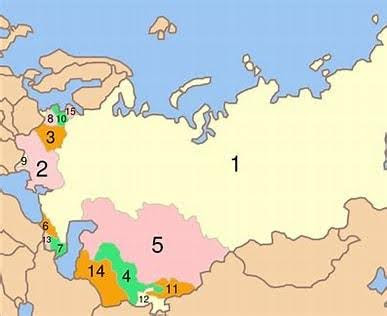
(From Wikipedia. All the numbered areas except "1" are former Soviet republics that became independent.)
Yet this was not the breakup of a nation-state. It was the breakup of an empire—an empire that had been built by conquering many different peoples. In this sense, it was similar to the collapse of the Ottoman Empire and the Austro-Hungarian Empire in the early twentieth century. Japan and Britain also lost their "empires," but most of their citizens do not feel lingering attachment to those former possessions.
Russia is different. A segment of the Russian elite—whose own economy has long been weak and who historically enriched themselves through the exploitation of other peoples and resources—still cannot let go.
Not All Russians Are Conservatives
Russia's elites are diverse. There are intellectuals who inherit the liberal traditions of Western Europe, but they have always been a small minority and have never been able to come together as a real political force.
On the other hand, many within the military and the intelligence services long for a return to Soviet-style authoritarian rule and imperial dominance. (Of course, some are more enlightened or technocratic, or simply avoid taking risks.) But as a group, they wield the power of the state.
Back in the chaotic 1990s, Alexander Bovin—a well-known liberal commentator in Moscow—once said to me: "Young man, even if Russia looks miserable now, it will someday rise again like a snake—not a dragon. Be careful."
In the early 2000s, a scholar in Uzbekistan told me: "The old KGB people are dangerous. They tell us, ‘You can't run a country on your own. Sooner or later, we'll come back.'"
These conservative members of Russia's elite are driven by a mix of nationalist arrogance, selfish material interests, and ignorance of the modern values of freedom and democracy. They do not care about the well-being of other nations—or even of their own people.
Russia's Limitations
(Dependence on Oil)
Russia's power rises and falls with the global price of crude oil. It lacks the kind of economic and social prowess that would allow it to grow beyond that ceiling.
Russia's main exports are crude oil and natural gas, grain, weapons, and nuclear power plants. Oil-related revenues consistently account for more than 30% of federal budget income, so Russia's GDP moves almost in parallel with world oil prices.
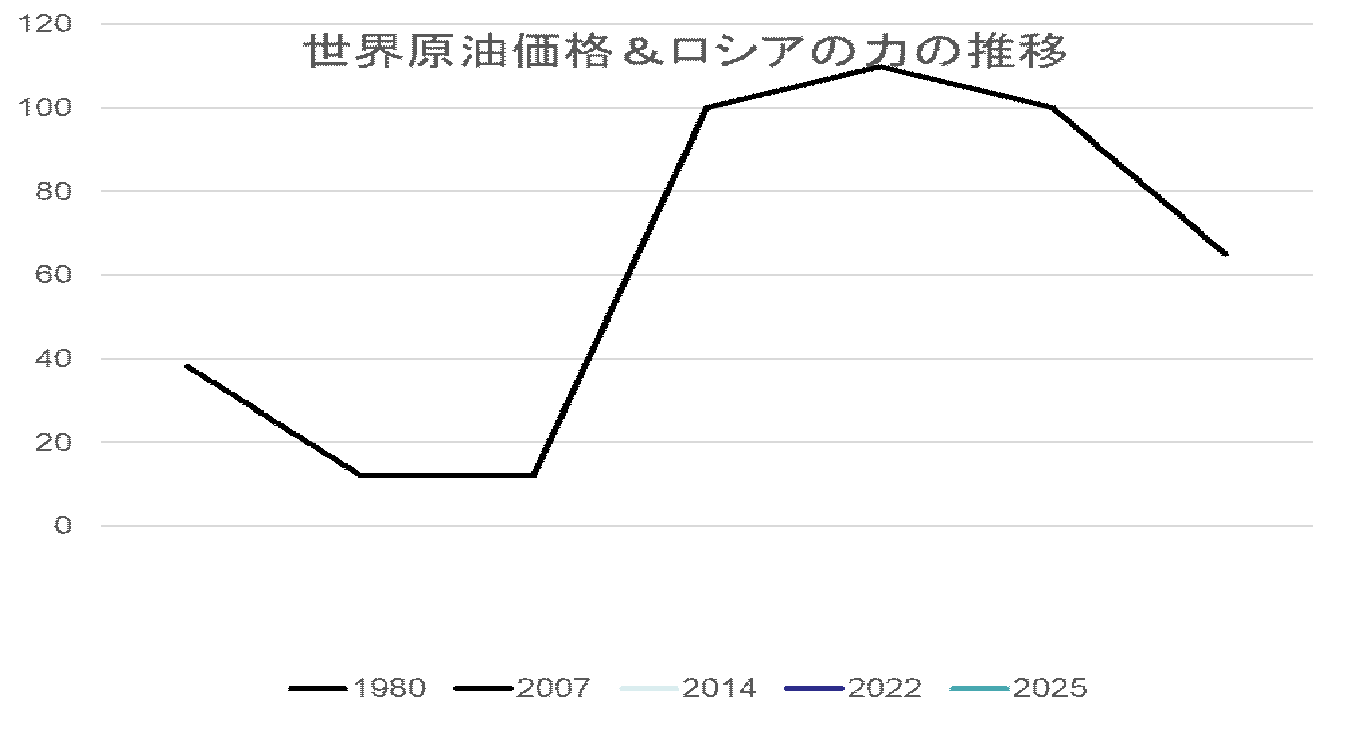
(Figure 1: Author's compilation using data from World Economic Indicators. Brent crude)
Figure 1 shows how global oil prices have moved since the late 1970s—and the turning points match, almost perfectly, the ups and downs of Soviet and Russian national power.
After the 1973 oil shock, soaring prices helped create the illusion of strong economic performance in the late Brezhnev years. Then oil prices collapsed; the Soviet Union faced looming budget deficits; and Gorbachev came to power, trying to revive the socialist economy through reforms.
But those reforms ended up destroying the Soviet command system itself. The result was the collapse of the USSR and the rise of a chaotic, bazaar-style economy. Throughout the Gorbachev and Yeltsin years, global oil prices remained depressed. By the mid-1990s, Moscow tried to fake a recovery through huge bond issues, but it all ended in default in August 1998.
Amid economic chaos and the Chechen wars, Putin came to power in 2000—just as global oil prices began to rise. Oil that cost about $18 per barrel in 1999 climbed to $73 by 2007.
In February 2007, at the Munich Security Conference, Putin warned the West against "pressuring Russia's interests." In August 2008, he invaded Georgia to block its path toward NATO membership.
Oil prices kept climbing (peaking in 2012 at $112). In 2014, Putin again used force—this time to seize Crimea and parts of eastern Ukraine, again to halt NATO expansion. And in February 2022, he launched the full-scale war against Ukraine to detach eastern Ukraine by force.
Around 2010, I casually remarked to a Moscow taxi driver, tricking him to reveal what he really thinks. "President Putin is impressive, isn't he. The economy is doing well." He shrugged and replied, "With oil prices this high? Anyone could do it."
(The Public Does Not Believe in "Freedom and Reform")
Why is there a ceiling on Russia's rise? The problem is not only its conservative elites. A deeper reason is that ordinary Russians—except many younger people—resist liberalization and reform. A large share of the population dislikes democracy and the market economy.
I worked in Moscow for several years right after the Soviet collapse. The chaos and humiliation ordinary people suffered from 1992 for about two years were beyond words.
Inflation reached roughly 6,000% in two years (because price controls propped up by subsidies were suddenly removed). Salaries were delayed everywhere. Mafia groups fought gun battles in broad daylight. For nearly two years, the law of the land was guns and money.
Yeltsin's government talked about freedom, democracy, and a market economy, hoping this would attract Western support and investment. But for most Russians, "democracy" brought only chaos, and the "market economy" brought inequality and the rise of oligarchs.
In the West, there is still a comforting assumption that "once the dictatorship is gone, Russia will naturally democratize."
But in reality, Russian society distrusts reform, supports the strong leader Putin, and expects him to redistribute the wealth.
Return of the Soviet-Style, State-Dominated, Military-Heavy Economy
What will Russia's economy look like after the war in Ukraine? The answer will determine Russia's future power.
When the West imposed sanctions after the invasion, many expected Russia's economy to collapse. But so far it hasn't. Massive investment in the defense industry has pushed wages up. Real wages have continued to rise since the start of the war.
People feared that Western sanctions would wipe out consumer goods like cars and home appliances, since Russia depended heavily on Western brands. But Chinese cars have filled the gap, and Western goods continue to reach Russia despite sanctions. As a result, everyday life has not changed dramatically. Putin says "sanctions don't work," and Western media often echo that view.
But sanctions bite hard in areas like commercial aircraft, aircraft parts, industrial machinery, and components.
Russia's version of GPS—GLONASS—is struggling to maintain enough satellites due to shortages of advanced semiconductors.
Russia relies heavily on imported precision ball bearings and special steel, so shortages affect weapons production all the way down to artillery and shells.
Another problem is that global oil prices have recently entered a downward trend. Combined with tougher Western sanctions, this has reduced Russia's oil-related federal revenues and is widening its budget deficit.
More importantly, since the war began, Russia has moved to re-nationalize more companies. The economy is shifting even more toward a state-run, defense-heavy Soviet model. Many foreign firms have withdrawn from direct investment in Russia. All of this darkens the country's long-term outlook.
In early November, Russia unveiled what it called its "first AI-powered robot." On stage, the robot tried to wave to the audience but fell forward under the weight of its own arm—and stopped moving.
While China holds events where swarms of robots dance and jump in sync, Russia produced this small tragedy. The technological gap is obvious.
Russia likes to boast about its advantage in nuclear weapons, and it is true that it has more warheads than the United States. But most of them are past their service life, and modernizing them costs money.
Meanwhile, the United States has launched its "Golden Dome" project to neutralize Russian nuclear missiles—much like the old Strategic Defense Initiative. Moscow's attempt to respond symmetrically to the SDI in the 1980s drained its strength and helped accelerate the Soviet collapse. The parallels are hard to miss.
"After Putin, There Will Still Be a Putin"
When dealing with Russia, the West often falls into the naïve belief that "once the dictator Putin is gone, the Russian people will choose democracy." Yet even in Western countries, democracy is being chipped away by populism. All the more so in Russia: as we have seen, there is little reason to expect that "Russia will democratize after Putin." The Russian public remains skeptical of freedom and democracy, and liberals have never formed a unified political force.
There have always been young Russians who are liberal and reform-minded. But after the collapse of the USSR in 1991, they were swept away by social turmoil and the rise of oligarchic capitalism, and gradually worn down.
I taught at a business school in Moscow in the 2000s, and most students openly said that resisting reality (corruption, bureaucracy, lack of supply chain etc.) was pointless. Those who wanted to work in a forward-looking way left the country.
After the invasion of Ukraine in 2022, many young people opposed the war but kept silent—and within a short time, more than 200,000 fled abroad.
This is the reality. Authoritarian and imperial forces do not function as one coherent body with a single villain at the top whose removal brings freedom. The structure is deeper.
The conservative, imperialist bloc—made up of elements in the military, intelligence services, parts of academia, and parts of the media, all clinging to their own status and privileges—will undoubtedly place one of their own as Putin's successor. Putin himself had served as head of the Federal Security Service (FSB, formerly KGB) before becoming prime minister in August 1999.
And those close to President Yeltsin, whom I personally knew, always acted with the awareness that the old KGB watched their every move.
So after Putin, Russia will still be led by a "Putin-like" figure—shaped by the same old KGB culture: clueless about economics, obsessed with politics and military power, and an obstacle to Russia's modernization.
But the picture above does not mean that Russia must be treated as an enemy at all costs. Russia can be deterred—and like a Titanic that never quite sinks to the bottom, it drifts beneath the surface, rising and falling with oil prices.
Does Russia Have Capacity to Attack NATO After Ukraine?
In the past, the West tended to underestimate post-Soviet Russia, believing that NATO could safely expand into the Baltic states and other former Soviet republics. But when rising oil prices restored Russia's strength—and Moscow pushed back with force in Georgia and Ukraine—an opposite, exaggerated "Russia threat" narrative took hold.
Today, in Europe and America, the idea is widespread: "After Ukraine, Russia will move on to NATO countries."
It is true that Russia has territorial frictions with several NATO members, including Estonia and Norway. Even with non-NATO neighbors like Kazakhstan and Azerbaijan, Moscow has potential conflict zones.
For NATO countries close to Russia, strengthening deterrence is a serious concern. Their anxiety is understandable: after World War I, the Soviet Union set out to reclaim the territories it lost at Brest-Litovsk—many of which had become independent states—and, after years of fighting and bloodshed, succeeded in re-absorbing nearly all of them by the end of World War II.
Still, ideally, NATO should more quietly build up its deterrence to avoid provoking Russia into a costly arms race.
Russia's military power has limits—just as the United States and NATO European countries do.
After the Cold War, both sides drastically downsized their defense industries and now even struggle to recruit soldiers.
In the war in Ukraine, Russia has mobilized poor young men with financial incentives and now struggles to recruit prisoners. Many NATO countries had suspended conscription, and countries like Germany that are considering bringing it back face strong resistance.
Russia has also lost more than 3,000 tanks during the war, and Russian forces in Ukraine sometimes advance using motorcycles and SUVs. The Russian army was unable to fully capture even the small strategic town of Pokrovsk in eastern Ukraine, despite trying for more than four months.
Russia's tank-production capacity is limited. It will take at least a decade to rebuild serious ground forces for a European theater of war.
And in modern warfare, drones have made tanks and armored vehicles increasingly outdated—yet no new method of advancing ground forces has emerged to replace them.
The United States No Longer Puts "Freedom and Democracy" First
When considering Europe after the Ukraine war, we must recognize that Trump's America has little interest in promoting freedom and democracy.
In the past, ambitious actors in countries bordering Russia could raise the banner of "defending freedom and democracy" and reliably receive support from the United States and Western Europe.
For Russia and other authoritarian governments, this looked like a conspiracy for regime change, and sometimes their overreactions led to conflict.
But Trump is a man without strong values, and many major Western European countries also treated Ukraine—whose political culture contains elements quite different from Western Europe—as a buffer state until the moment Russian forces invaded.
Therefore, even if a clash occurs after the Ukraine war between Russia and a NATO country, it is unlikely to escalate the way the current war did. After a ceasefire in Ukraine, the guiding principle should be maintaining the status quo and preventing needless cycles of confrontation between Russia and the West.
In 1975, at the height of the Cold War, the Helsinki Final Act was signed. It affirmed respect for national sovereignty, non-use of force, the inviolability of frontiers, peaceful resolution of disputes, and set out confidence-building measures—leading to agreements such as the MBFR treaty on reducing conventional forces.
The Intolerable Lightness of Russia's Existence in Asia--What does such a Russia mean for Asia—and for Japan?
First, we must recognize Russia's fragility in Asia. Russia's Asian territories are linked to its European core by only a single line—the Trans-Siberian Railway. The northern regions are nearly uninhabited, while the southern border lies close to China; if this area were ever cut off, Russia's east and west would be separated.
Recently, the sea route via the Kamchatka Strait has gained attention, but it cannot be used year-round, and shallow passages and bottlenecks prevent it from becoming a real commercial artery.
Moreover, as noted earlier, Russians living in the Far East often seem uneasy about the legitimacy of their presence there. They know that these lands became Russian only recently—under the 1860 Treaty of Beijing.
The imbalance between China and Russia in the Far East is enormous. The Russian Far East has a population of about 6.5 million; China's northeast has around 130 million.
Even if northeastern China's heavy industry is somewhat stagnant, traveling along the old South Manchuria Railway line, one encounters city after city of five million people—a striking sight.
The Russian Eastern Military District likely has fewer than 100,000 troops today, while China's Shenyang Military Region keeps roughly 400,000 stationed there.
For this reason, whether the Russians love the Chinese or not, Russia's golden rule of diplomacy is: avoid conflict with China at all costs. Dmitri Trenin, a leading Russian foreign-policy scholar, once told me this directly, and others have said the same.
Russia and Japan: Deterrence and Reassurance
For Japan, Russia in the Far East is not a decisive factor. As noted, Japan cannot use Russia as a counterweight to China. Moscow will never accept such a role.
From Russia's perspective, China could threaten the security of the Russian Far East if Russia renegades, while Japan—controlled by the United States and far weaker than before in capital and technology—cannot offer compensation that outweighs that risk.
Economically, Russia's Far East matters to Japan mainly as a source of energy imports. As an export market it is tiny, and port capacity is limited. It is not a major economic factor.
Militarily, Russia could pose some threat by deploying short-range nuclear missiles or cruise missiles on land or at sea. But Moscow is unlikely to use them to threaten Japan.
The Russian military in the Far East is focused on the United States. Unless Japan provokes Russia, Russia will not point its guns at Japan.
The Russian Pacific Fleet has very limited capabilities. Its main mission is likely to protect the strategic nuclear submarines operating in the Sea of Okhotsk. In terms of both surface vessels and submarines, its strength is far below that of the Japan Maritime Self-Defense Force.
In peacetime, Russian ships may coordinate with Chinese vessels to pressure Japan, but in wartime their operations would be constrained because they could not guarantee safe passage through Japan's straits; the Japanese archipelago works as a lid for the Russian navy stationed in Vladivostok.
Therefore, Japan should maintain relations with Russia without provocation (the Northern Territories issue cannot be solved by force), while ensuring that Russia does not cause harm.
After the Ukraine war, Japan should base its Russia policy on three principles: maintain the relationship, cooperate where possible, and never drop the Northern Territories issue.
Now that U.S.–China tensions are easing, this is also a favorable moment to propose an "Asian CSCE"—an Asian version of the 1975 Helsinki framework—based on the principles of status quo, and prohibiting changes of borders by force. It will serve interest of all nations in Asia, including Japan and Russia.
(Akio Kawato , Former DCM, Embassy of Japan in Russia)
- May, 2026, "Religious Resurgence and Trump 2.0: Kirk's Legacy, University Control, and Immigration Management" by Yoshiyuki Kato, Professor, Rikkyo University
- May, 2026, "The Founding of America and Conspiracy Theories" by Tsuyoshi Kamimura, Associate Professor, Kwansei Gakuin University
- May, 2026, "Latin American Diplomacy under Trump 2.0: The Scope and Effectiveness of the "Western Hemisphere" Policy" by Suguru Osawa, Associate Professor, Aichi Gakuin University
- April, 2026, "Is Trump 2.0's Foreign and Security Policy Strategic?" by Tsuneo Watanabe, Senior Fellow, The Sasakawa Peace Foundation
- April, 2026, "The Trump Tariffs and Its Ramifications" by Yorizumi Watanabe, Professor Emeritus, Keio University
- April, 2026, "Donald Trump's Vision of the State and the Separation of Powers: An Analysis of His Tariff Policy" by Takeshi Umekawa, Professor, The University of Tokyo
- March, 2026, " Has U.S.–China Competition Eased under Trump 2.0? " by Ryo Sahashi, Professor, The University of Tokyo
- March, 2026, "Economic Security Under Trump 2.0 : A Shift in Values and Changing Options " by Kousuke Saitou, Professor, Sophia University
- March, 2026, " The Trump Administration's Economic Policies and the U.S. Economy: Risks Emerging in the U.S. Economy Amid Strong Equity Market and Economic Growth " by Masaharu Takenaka, Professor, Ryukoku University
- February, 2026, "The Impact of Russia-North Korea Military Cooperation on Regional Security" by Narushige Michishita, Vice President, National Graduate Institute for Policy Studies
- February, 2026, "The Sino-Russian Strategic Partnership and Japan's Security: Future Trajectories and Implications" by Shinji Yamaguchi, Senior Fellow, National Institute for Defense Studies
- February, 2026, "A Perspective on Russia's National Security Strategy: Focusing on the ‘Multipolar World,' ‘Anti-Westernism,' and ‘Nuclear Status'" by Shinji Hyodo, Vice President for Academic Affairs, National Institute for Defense Studies
- February, 2026, "The Possible Revival of "Imperial Russia" and What It Means for Asia and Japan" by Akio Kawato , Former DCM, Embassy of Japan in Russia
- February, 2026, "Russia After the Ukraine War: A Challenge to Japanese Security Strategy" by Matake Kamiya, Professor, The National Defense Academy
- January, 2026, "The Future of US-Russia Relations under Trump 2.0: Implications for Japan" by Taisuke ABIRU, Senior Research Fellow, the Sasakawa Peace Foundation
- January, 2026, "Hybrid Warfare Transformed Amidst the Ukraine War: Russian Tactics and the Global Diffusion of Threat" by Yoko HIROSE, Professor, Keio University
- October, 2025, "The End of Pax Americana and the Rise of China" by Nobuhiko Tamaki, Ph.D. Professor, Chuo University
- October, 2025, "China's "Kill ‘Three' Birds with One Stone" Approach to Deep-Seabed Resource Development" by Chisako Masuo, Professor, Kyushu University
- October, 2025, "Geopolitics of Science and Technology: China's Scientific Revolution vs. Trump 2.0" by Haruo Kurasawa, Science Journalist
- October, 2025, "China's Strategic Gains and Losses from the Ukraine and Middle Eastern Conflicts and Its Military Partnership with Russia" by Masafumi Iida, Director, Security Studies Department, The National Institute for Defense Studies
- October, 2025, "Medium- to Long-Term Prospects of the Chinese Economy" by Toshiya Tsugami, Director, Tsugami Toshiya's Works
- October, 2025, "China's Military Power as It Celebrates Its Centennial " by Bonji Ohara, Founder & Rep. Director, DEEP DIVE
- October, 2025, ""Pax China" from the Global South's Perspective" by Shin Kawashima, Professor, The University of Tokyo
- July, 2025, "What Makes Modi 3.0 Distinct and a Future Outlook" by Toru Ito, Professor, The National Defense Academy
- July, 2025, "Mid- to Long-Term Outlook for the Indian Economy: How to Assess the Indian Market―Benefits and Challenges of Japan-India Collaboration" by Go Yamada, Principal Economist, Japan Center for Economic Research
- July, 2025, "The India-China Border Issue and India's Military Strategy" by Satoru Nagao, Research Fellow, Hudson Institute
- July, 2025, "Where the India-Pakistan Conflict Is Headed" by Satoru Nagao, Research Fellow, Hudson Institute
- July, 2025, "India, a Leader in the Global South - What Is It Really Like?" by Tomoko Kiyota, Associate Professor, Nagasaki University
- July, 2025, "India's Diplomacy with the United States and Russia" by Mari Izuyama, Chief Research Fellow, National Institute for Defense Studies
- July, 2025, "Japan-India Security Cooperation in India's Grand Strategy" by Kazutoshi Tamari,Professor, Chukyo University
- July, 2025, "What's Next for Japan-India Strategic Partnership" by Kenji Hiramatsu, Former Ambassador to India
- April, 2025, "Outlook for the US Economy: Whether the "Golden Age" Is Beginning?" by Akihiko Yasui Director, Mizuho Research & Technologies, Ltd.
- April, 2025, "China's Economy Facing Internal and External Challenges" by Osamu Tanaka,Visiting Professor, Takushoku University
- April, 2025, "The Role of the Private Sector in Economic Security: Reflections from Japan-US and Public-Private Relations Perspectives" by Kohei Takeda Research Associate, Weatherhead Center for International Affairs at Harvard University
- April, 2025, "Proposal for Strengthening the Competitiveness of Japan's Defense Industry: Shift from the "Family Type" to the "Strategic Keiretsu-Type" System" by Yuzo Murayama Professor Emeritus, Doshisha University
- April, 2025, "Considering Economic Security Focusing on Food and Energy Security" by Takashi Sekiyama Professor, Kyoto University
- March, 2025, "An Outlook for the Japanese Economy" by Takao Komine, Visiting Professor, Taisho University.
- March, 2025, "Considering Social Security and Tax Reforms: What Will Become of Japan's Fiscal Reconstruction?" by Kazumasa Oguro, Professor, Hosei University.
- March, 2025, "Progress in Economic Security Policies and Further Strengthening of National Security Policy Integration Amid the Acceleration of "Securitization"" by Nobushige Takamizawa, Visiting Professor, The University of Tokyo.
- March, 2025, "From Economic Security to Geoeconomics" by Kazuto Suzuki, Professor, The University of Tokyo.
- January, 2025, "Healthcare Policy in the Second Trump Administration" by Takakazu Yamagishi Professor, Nanzan University.
- January, 2025, "Foreign and Security Policies of the Second Trump Administration" by Yuki Tatsumi Senior Fellow at the Stimson Center.
- January, 2025, "The Second Trump Administration and Japan-US Relations: Viewed by a Former Practitioner of Diplomacy" by Koji Tomita Former Ambassador to the United States.
- January, 2025, "The "FEAR" Returned: The Meaning of Trump's Reinstatement" by Koji Murata Professor, Doshisha University.
- December, 2024, "Analysis of the Trump Vote in the 2024 U.S. Presidential Election" by Takeshi Iida Professor, Doshisha University.
- December, 2024, "Trump's Victory Factors: Why Trump Wanted to Be President Again" byTsuneo Watanabe Senior Fellow, the Sasakawa Peace Foundation.
- December, 2024, "Kamala Harris and Factors Behind Her Defeat:Can the Democrats Make a Comeback?" by Masahito Watanabe Professor, Keio University.
- December, 2024, "American Democracy and Society Viewed from an Analysis of the 2024 US Presidential Election" by Takayuki Nishiyama Professor, Seikei University.
- October, 2024, "Assessment of Russia's Military Strength, Stockpiles, and Defense Production Base: Evaluating Russia's Capability to Continue Warfare" by Yu Koizumi, Associate Professor for RCAST, The University of Tokyo.
- October, 2024, "Germany's Arms Assistance for Ukraine: Has Its Culture of Self-Restraint Been Overcome?" by Norihide Miyoshi who served for The Japan News).
- October, 2024, "Russia's War Costs: Military Expenditures and Resource Allocation in "Wartime"" by Miho Okada, Professor, National Defense Academy.
- October, 2024, "Assessment of Russia's Military Strength, Stockpiles, and Defense Production Base: Evaluating Russia's Capability to Continue Warfare" by Yu Koizumi, Associate Professor for RCAST, The University of Tokyo.
- October, 2024, "Economic Sanctions and the Russian Economy" by Makoto Onozuka,Research Manager, Japan External Trade Organization.
- October, 2024, "Russia's Prolonged Military Invasion of Ukraine and Ukrainian Public Opinion: Focusing on Perceptions of Negotiations, Territory, and Sovereignty" by Tsuyoshi Goroku Associate Professor, Nishogakusha University.
- September, 2024, " The Russia-Ukraine War Viewed from War Termination Theory" by Yasuaki Chijiwa Chief Research Fellow, National Institute for Defense Studies.
- September, 2024, " How the Winter War Ended: A "Compromised Peace" Ends the Ukraine War?" by Tomoyuki Hanada Chief Research Fellow, National Institute for Defense Studies.
- September, 2024, " The End of the Soviet-Afghan War" by Takeshi Yuasa Professor, Sophia University Professor, Sophia University.
- July, 2024, " The Yoon Suk-yeol Administration and the ROK-Japan Relations" by CHOI, EunmiJ, The Asan Institute for Policy Studies, Research Fellow.
- July, 2024, " The 22nd National Assembly Election and South Korean Politics " by Hideki Okuzono, Professor, University of Shizuoka.
- July, 2024, " South Korea's Economic Security Policy and New Japan-ROK Economic Cooperation" by Satoru Okuda, Professor, Asia University.
- July, 2024, " Japan-ROK Cooperation: Not an Option but a Must" by Chey Tae-won, Chairman and CEO SK Inc.
- July, 2024, "Examining the Yoon Administration's Foreign Policy over the Past Two Years " by Junya Nishino, Professor, Keio University
- July, 2024, "North and South Korea Enter a New Phase of Competition" by Narushige Michishita, Executive Vice President and Professor at the GRIPS.
- July, 2024, "The Camp David Summit and U.S.-Japan-ROK Security Cooperation" by Yasuyo Sakata.
- April, 2024, "The Middle East Question and Japan" by Sinan Levent, Professor, Ankara University
- April, 2024, "The Israel-Hamas War and the Disruption of the Rules-Based International Order-Viewed from Theories of International Politics-" by Matake Kamiya, Professor, National Defense Academy of Japan
- March, 2024, " Regional Political Dynamics in the Middle East - Factors Changed and Remained unchanged after the October 7th Incident-" by Amane Kobayashi, Senior Researcher, the Institute of Energy Economics, Japan
- March, 2024, "The Ukraine War and Russia's Changing Middle East Diplomacy " by Taisuke Abiru, ,Senior Research Fellow, the Sasakawa Peace Foundation
- March, 2024, "Superpowers' Engagement with the Middle East and Their Intentions " (Edited lecture transcript) by Koichiro Tanaka, Professor, Keio University
- March, 2024, " Why the Israel-Hamas War Broke Out?" by Hiroyuki Suzuki, Professor, Associate Professor, The University of Tokyo
- March, 2024, " The Middle East Peace Process-Its Development and Future " by Chie Ezaki, Associate Professor, National Defense Academy of Japan
- March, 2024, "The Origin and Prospects of the Question of Palestine -Transformation of Israeli Politics and "10/7" as a Boiling Point- " by Aiko Nishikida, Professor, Keio University
- January, 2024, "Indonesia's Global South Diplomacy and Its Impact on Domestic Politics" by Jun Honna, Professor, Ritsumeikan University
- January, 2024, "Brazilian Foreign Policy and the Global South" by Hiroyuki Urabe, Professor, Dokkyo University
- January, 2024, "Africa's Population Explosion:How the "Last Frontier" Will Change the World" by Keiichi Shirato, Professor, Ritsumeikan University
- January, 2024, "The Impact of PM Modi's Global South Policy on the Military Strategy of India" by Satoru Nagao, Research Fellow, Hudson Institute
- December, 2023, "The Global South Concept and Its Historical Development and Outlook" by Ken Jimbo, Professor, Keio University
- December, 2023, "India's Global South Diplomacy and Japan" by Toru Ito, Professor, National Defense Academy
- December, 2023, "The Global South Viewed from China's Perspective" by Shin Kawashima, Professor, the University of Tokyo
- October, 2023, " Political and Social Divide in the United States and Challenges for Democracy" by Kazuhiro Maeshima, Professor, Sophia University
- October, 2023, " Has US Foreign Policy Doctrine Changed? " by Tsuneo Watanabe, senior Fellow, Sasakawa Peace Foundation
- October, 2023, " America's Journey to Hegemony and Its Challenges" by Koji Murata, Professor, Doshisha University
- September, 2023, " A Medium- to Long-Term Outlook for the US Economy―Can America Win the Competition with China?―" by Tatsuhiko Yoshizaki, Chief Economist, Sojitz Research Institute, Ltd.
- September, 2023, " China's Strategy toward the U.S " by Toshiya Tsugami, Adjunct Researcher, the Japan Institute of International Affairs
- September, 2023, " The Deepening Security Dilemma in US-China Relations " by Ryo Sahashi, Associate Professor, the University of Tokyo
- July, 2023, "How Would North Korea and China Use Nuclear Weapons? -- Scenarios for Discussion" by Narushige Michishita, Professor at the National Graduate Institute for Policy Studies
- July, 2023, "Japan's Nuclear Strategy" by Nobukatsu Kanehara, Visiting Professor at Doshisha University
- July, 2023, "G7 Hiroshima Summit and Efforts for a Safer World Without Nuclear Weapons" by Nobushige Takamizawa, Visiting Professor at the University of Tokyo
- July, 2023, "Roundtable Discussion—Let's Talk Frankly About Nuclear Issues" by SSDP Discussion Members
- June, 2023, "Exploring the Possibility of Nuclear Attacks on Japan-Nuclear Simulations in the Era of "Three-Front Nuclear Threats" by Hiroyasu Akutsu, Professor, Heisei International University
- June, 2023, "China's Aim to Become a Nuclear Superpower" by Masafumi Iida, Head of China Division at the National Institute for Defense Studies
- June, 2023, "Challenges for Nuclear Arms Control in the Era of Strategic Competition Among Major Powers" by Nobumasa Akiyama, Professor, Hitotsubashi University
- June, 2023, "Mechanisms and Functions of Nuclear Deterrence-Development of US Nuclear Strategic Theory" by Masashi Murano, Research Fellow of Hudson Institute
- April 2023, "Changing NATO's "Achilles Heel"—Security in the Baltic Region" by Sanshiro Hosaka, Fellow,The International Centre for Defence and Security, Estonia
- April 2023, Evolution of European Security System - Visualization of Deterrence by NATO and the "Russian Problem" by Michito Tsuruoka, Associate Professor, Keio University
- April 2023, "An Expanded NATO's Nuclear Strategy" by Yoko Iwama
- March, 2023, "Germany's Civilian Power Model—Modification or Termination?--Germany Struggling with the War in Ukraine" by Toshiya Nakamura, Professor, Nagoya University
- March, 2023, "France and the Ukraine War―The Logic Behind Macron's Security Policy" by Ken Endo, Professor, The University of Tokyo
- March, 2023, "The Russo-Ukrainian War and the British Response: 2014-2023" by Yuichi Hosoya, Professor, Keio University
- March, 2023, "Where is America Heading—Implications and Challenges for the Allies" by Koji Murata, Professor, Doshisha University
-
December 2022, Proposal "Defending Our Country – Defense Policy in a New Cold War Era" was announced
- Front Cover
- Changes in the Security Environment Surrounding Japan - Shifting Power Balance and the Three Front Threats Ken Jimbo
- How Will "Japan Contingencies" Emerge? Osamu Onoda
- The Japan-US Alliance Revisited: Is it Dependable? Chikako Kawakatsu Ueki
- A New Phase of Defense Diplomacy and Defense Production and Technology Base Ippeita Nishida, Tsuneo Watanabe
- Intelligence Activities in the Post-Ukraine War Era Jun Nagashima
- Responding to the Nuclear Threat Masashi Murano
- No Time to Lose for Improving Japan's Defense Capabilities - Can the JSDF Defend the Homeland? - Ryoichi Oriki
- Toward the Formulation of a New "National Security Strategy" Hideshi Tokuchi
- October 2022, "Japan-China Relations under the Long-term Administration of Xi Jinping: Current Status, Prospects, and Expectations" written by Kazuyuki Suwa, Professor, University of Shizuoka
- October 2022, "China's Policy on the Global South --- China's World View and the Configuration of the US-China Confrontation " written by Shin Kawashima, Professor, the University of Tokyo
- October 2022, "Military Strategy of Xi Jinping's China" written by Bonji Ohara, Senior Fellow, Sasagawa Peace Foundation
- September 2022, " Social Governance by the Communist Party of China: The Present State and the Future Prospects " written by Kazuko Kojima, Professor, Keio University
- September 2022, "The Relationship between Domestic Politics and Diplomacy under the Xi Jinping Administration- Why Were the Large-Scale Military Exercises Decided?" written by Chisako T. Masuo, Professor, Kyushu University
- September 2022, "Xi Jinping's China--- Prospects for Its Climate Change Policy ---" written by Takashi Sekiyama, Associate Professor, The University of Kyoto
- August 2022, " Current Assessment of the Xi Jinping's Rule and Prospects for the Third Term of the Xi Administration " written by Takashi Suzuki, Associate Professor, Aichi Prefectural University
- August 2022, " Economic Challenges Awaiting the Xi Jinping Administration As it Enters its Third Term" written by Toshiya Tsugami, Director, Tsugami Toshiya's Works
- July 2022, "The Russian Invasion of Ukraine and the Future International Legal Order" written by Masahiro Kurosaki, Associate Professor, National Defense Academy
- July 2022, "The Ukraine War and Security in East Asia" written by Narushige Michishita, Vice President, National Graduate Institute for Policy Studies
- July 2022, "How Will the Ukraine War Change the New US-China Cold War?" written by Yasuhiro Matsuda, Professor, the University of Tokyo
- July 2022, "Impact of the Ukraine War on the Global Economy" written by Tatsuhiko Yoshizaki, Chief Economist, Sojitz Research Institute, Ltd.
- June 2022, "Why War Occurs in Europe?--The Structural Transformation of the European Security Order in the Post-Cold War Era --" written by Yuichi Hosoya, Professor, Keio University
- June 2022,"The Russia-Ukrainian War and the Behind-the-Scenes Stance of the United States" "On Economic Security" written by Tsuneo Watanabe, Senior Fellow, Sasakawa Peace Foundation
- June 2022, "The Russia-Ukraine War and NATO", written by Michito Tsuruoka, Associate Professor, Keio University
- June 2022, "The Ukrainian War Viewed from Theories of International Politics" written by Matake Kamiya, Professor, National Defens Academy
- March 2022, "Economic Security Challenges and Cyber Security" written by Jun Osawa, Senior Research Fellow, Nakasone Peace Institute
- March 2022, "On Economic Security" written by Matake Kamiya, Professor, the Ntional Defense Academy
- March 2022, ""Economic Security" and the Review of the 2013 NSS and the Related Strategy Documents" written by Nobushige Takamizawa, Visiting Professor, the University of Tokyo
- March 2022, "The US-China Rivalry and Economic Security" written by Yuzo Murayama, Professor, Doshisya University
- March 2022, "Japan's National Security Policies and Science and Technology" written by Nobukatsu Kanehara, Professor, Doshisya University
- March 2022, "Economic Security in the Free Trade Regime" written by Kazuto Suzuki, Professor, the University of Tokyo
- January 2022, "The 2022 South Korean Presidential Election and the Next Administration's Foreign and Security Policy" written by Junya Nishino, Professor, Keio University
- January 2022, "North Korea's Nuclear and Missile Development and Japan's Defense" written by Hideshi Tokuchi, Senior Fellow, GRIPS
- January 2022, "What will Become of Japan-South Korea Relations? The 1965 Japan-South Korea Treaty System in Jeopardy" written by Masao Okonogi, Professor Emeritus, Keio University
- December 2021, "Economic and Social Conditions in North Korea and its Relations with South Korea" written by Mitsuhiro Mimura, Chief Research Fellow, The Economic Research Institute for Northeast Asia.
- December 2021, "China's Korean Peninsula Policy and North Korea" written by Shin Kawashima, Professor, the University of Tokyo.
- December 2021, "China's Korean Peninsula Policy and North Korea" written by Shunji Hiraiwa, Professor, Nanzan University.
- December 2021, "What to Do with the Relations with North Korea?" written by Hitoshi Tanaka, Chairman for Institute for International Strategy at the Japan Research Institute.
- October 2021, "Strategic Implications of North Korea's Enhanced Nuclear and Missile Capabilities" written by Narushige Michishita, Vice President, National Graduate Institute for Policy Studies.
- October 2021, "The Biden Administration's North Korea Policy: Its Low Priority and Looming Crises" written by Tsuneo Watanabe, Senior Fellow, Sasakawa Peace Foundation.
- October 2021, "The Evolution of the US-ROK Alliance: Tasks in the Biden Era" written by Yasuyo Sakata, Professor, Kanda University of International Studies.
- September 2021, "The Development of Regional Security Architecture: From Asia-Pacific to Indo-Pacific" written by Ken Jimbo, Professor, Keio University.
- September 2021, "The Strategic Development of Japanese Security Cooperation under Superpower Competition and the Development of the FOIP and its Operationalization" written by Nobushige Takamizawa, Visiting Professor, Graduate School of Public Policy, The University of Tokyo.
- August 2021, "Security Perceptions of Central Asian Countries--- From the Perspective of China Studies ---" written by Shin Kawashima, Professor, the University of Tokyo.
- August 2021, "Security in the Indian Ocean Region---Implication of the Galwan Incident for QUAD in the Indo-Pacific" written by Dr. Satoru Nagao, Fellow (Non-Resident), Hudson Institute.
- August 2021, "Easternization and Security in Asia" written by Tsuneo Watanabe, Senior Fellow, Sasakawa Peace Foundation.
- July 2021, "The Ideas of "Autonomy" and "Self-Reliance" in Contemporary India's Foreign Strategy" written by Kazutoshi TAMARI, Associate Professor,Chukyo University.
- July 2021, "Thailand's Security Policies and Threat Perceptions" written by Saya Kiba, Associate Professor, Komatsu University, Faculty of Intercultural Communication.
- July 2021, "Myanmar's Security Perceptions and the February 1 Coup d'Etat" written by Yoshihiro Nakanishi, Associate Professor, Kyoto University.
- July 2021, "Australia's Security Perceptions and the "Asia Threat"" written byTomohiko Satake, Senior Fellow, Defense Policy Division, Policy Studies Department, NIDS .
- June 2021, "The Indo-Pacific Regional Architecture: Its Future--- Multipolar Order Beyond US-China Relations ---" by Tsutomu Kikuchi, Professor, Aoyama Gakuin University
- June 2021, "The Quad Plus in the Security of Asia: Its Significance and Outlook" by Hideshi Tokuchi, Senior Fellow, National Graduate Institute for Policy Studies
- June 2021, "Indonesian Views and Perceptions on National Security" by Nobuhiro Aizawa, Associate Professor, The Graduate School of Social and Cultural Studies, Kyushu University
- June 2021, "Normalized Tensions in the Cross-Strait Relations--- Structural Changes in Taiwanese Society and the Xi Jinping Administration's Strategic Shift ---" by Yasuhiro Matsuda, Professor, The University of Tokyo
- June 2021, "China's Maritime Strategy and Responses of the United States and Japan" by Yoji Koda, Former Commander in Chief, Self Defense Fleet
- June 2021, "The South China Issues from the Perspective of the International Law Order",by Shigeki Sakamoto, Emeritus Professor, Kobe University
- May 2021, "Indonesian Views and Perceptions on National Security" by Nobuhiro Aizawa, Associate Professor, Kyushu University
- May, 2021, "The Philippine Foreign and Security Policy Perspective" written by Yusuke Takagi Associate Professor,National Graduate Institute for Policy Studies.
- May, 2021, "Vietnam's Security: Challenges and Responses" written by Tomotaka Shoji Head, Asia and Africa Division, Regional Studies Department, National Institute for Defense Studies
- March, 2021, "Can the Biden Administration Restore America as a Global Leader?" written by Matake Kamiya, Professor, the National Defense Academy of Japan.
- March, 2021, "The Biden Administration and Japan's Security Strategy" written by Hideshi Tokuchi, Senior Fellow, National Graduate Institute for Policy Studies.
- February,2021, "US Foreign and Security Policy Direction Viewed from the Biden Administration's Lineup" written by Tsuneo Watanabe, Senior Fellow, Sasakawa Peace Foundation
- February,2021, "Trade Policies of the Biden Administration" written by Takaaki Asano, Senior Analyst, Sumitomo Corporation Global Research Co. Ltd.
- February,2021, "The Biden Administration's Policy toward Russia" written by Taisuke Abiru, Senior Fellow, Sasakawa Peace Foundation
- January,2021, "Will US Policy Toward China Change?" lectured by Ryo Sahashi, Associate Professor, the University of Tokyo
- January,2021, "How will China View the Biden Administration?" written by Bonji Ohara, Senior Fellow, Sasakawa Peace Foundation
- January,2021, "An Assessment of the 2020 US Presidential Election-American Democracy Now-" lectured by Fumiaki Kubo, Professor, the University of Tokyo
- January,2021, "Two Trumpian Mysteries-Why did Trump win over 70 million votes? Why is his outrageous behavior unchecked?-" lectured by Kazuhiro Maeshima, Professor, Sophia University
- September, 2020, "The Novel Coronavirus (COVID-19) Pandemic and Internationa Relationsl" by Matake Kamiya, Professor, National Defense Academy of Japan
- September, 2020, "The Policy Agenda for the Xi Jinping Administration- COVID-19 Countermeasures and China's International Relations -" by Shin Kawashima, Professor, The University of Tokyo
- "Control in the United States and International Relations" by Koji Murata, Professor, Doshisha University
- September, 2020, "The EU's Response to COVID-19 and International Relations" by Yuichi Hosoya, Professor, Keio University
- August, 2020, "The Corona Crisis Seen from a Macroeconomic Perspective" written by Motoshige Itoh, Professor Emeritus, The University of Tokyo
- August, 2020, "The Coronavirus Pandemic and Japan's Infectious Disease Control" written by Takashi Mihara, Senior Research Fellow, NLI Research Institute
- August, 2020, "Infectious Disease Crisis Control in Japan- Recommendations on an Exit Strategy -" written by Kazumasa Oguro, Professor, Hosei University
- August, 2020, "Security against Infectious Disease Threats --- Policy Responses Abroad" written by Takashi Sekiyama, Associate Professor, Kyoto University
- June 2020,"Transformation of the International Order in the Middle East--- Varying Degrees of "Stateness" and Three Directions of the New Order" written by Satoshi Ikeuchi, Professor, Research Center for Advanced Science and Technology, The University of Tokyo
- June 2020,"Destabilization in the Middle East and its Impacts on Japan's Energy Security" written by Amane Kobayashi, Research Fellow, The Institute of Energy Economics
- May 2020: Urgent Recommendations "Toward a V-shaped Recovery after the Novel Coronavirus Pandemic "Coronavirus Testing for All" --- the First Step of the Next Phase"
- May 2020: "US Diplomacy toward Iran: Economic Sanctions as a Diplomatic Tool" Hiroki Sugita Columnist, Kyodo News
- "Russian Factors in the Middle East" Taisuke Abiru Senior Research Fellow, Sasakawa Peace Foundation
- "The SDF Dispatches to the Middle East --- History and Significance" Ippeita Nishida Senior Research Fellow, Sasakawa Peace Foundation
- March 2020, "Space and Security" Kazuto Suzuki Professor, Hokkaido University
- March 2020, "The US Security Space Policy --- With a Focus on the Establishment of Two Space Forces" Yasuhito Fukushima Chief Researcher, The National Institute for Defense Studies
- March 2020, "China's Recent Activities in Space and Cyberspace" Bonji Ohara Senior Research Fellow, Sasakawa Peace Foundation
- March 2020, "Environmental Security and Japan" Takashi Sekiyama Associate Professor, Kyoto University
- March 2020, "Changes in Global Environment and Security --- US Security Strategy" Hideshi Tokuchi Senior Fellow, National Graduate Institute for Policy Studies (GRIPS)
- February 2020, "Cyberspace Security" Motohiro Tsuchiya Professor, Keio University
- February 2020, "Japan's Space and Cyberspace Policy" Yukinari Hirose Former President of the National Institute for Defense Studies
- December 2019, "The US-China Confrontation --- Where Will Hegemony Reside Next?" Akio Takahara Professor, the University of Tokyo
- December 2019, "Challenges Facing the Chinese Economy" Osamu Tanaka Chief Senior Researcher, Institute of Developing Economies, JETRO
- December 2019, "US Strategic Perception on China: Implications for US Allied Partners" Tsuneo Watanabe Senior Fellow, Sasakawa Peace Foundation
- November 2019, "The Xi Jinping Administration's View of the International Order– China's emphasis on United Nations diplomacy and liberal economic policies−" Shin Kawashima, Professor, the University of Tokyo
- November 2019, "The Future of China's Security Strategy" Hideshi Tokuchi, Senior Fellow, National Graduate Institute for Policy Studies
- November 2019, "China --- Its Confidence and Anxiety" Bonji Ohara, Senior Research Fellow, Sasakawa Peace Foundation
- August 2019: Several Perspectives on the Korean Peninsula Issue--- The Deteriorating Japan-South Korea Relationship and the Uncertain Denuclearization of North Korea --- By Masahiro Akiyama Chairman, the SSDP
- July 2019, "An Outlook on the Denuclearization of North Korea--- What is the Stance of North Korea?---", Junya Nishino, Professor, Keio University
- July 2019, "An Outlook on the Denuclearization of North Korea --- How will the US move?", Narushige Michishita, Vice President, National Graduate Institute for Policy Studies
- July 2019, "Discussion on Denuclearization of North Korea", SSDP Discussion Meeting on May 8, 2019
- May 2019: "Current Status and Prospects of South Korea and Japan's Frictions over History: How to address the Judicial Problems", Masao Okonogi, Professor Emeritus, Keio University
- May 2019: "South Korea and Japan's Frictions over History" (Comments), Junya Nishino, Professor, Keio University
- May 2019: Japan and South Korea Relationships (Question & Answer)
- March 2019: "The Present State and Prospects of the Indian Economy and Economic Policies" written by Koji Kobayashi, Senior Economist Mizuho Research Institute Ltd.
- March 2019: "The "Modi diplomacy" in the History of Indian diplomacy--- Departure from or maintenance of the traditional diplomacy? ---" written by Toru Ito, The National Defense Academy of Japan
- February 2019: Dynamics of Indian Politics and the 2019 General Elections, written by Chiharu Takenaka, Professor of Rikkyo University
- February 2019: "Cooperative Strategy" to Realize "Competitive Strategy"--- The composite structure of Japan's "Free and Open Indo-Pacific" strategy (vision) ---, written by Matake Kamiya, Professor at The National Defense Academy of Japan
- January 2019:, A paper, "How will the US midterm elections results affect the Trump administration's foreign policy for 2019?" written by Tsuneo Watanabe, Senior Fellow, the Sasakawa Peace Foundation
- January 2019:, A paper, "The Present and Future of the International Trade Order" , written by Akihiko Tamura, Professor, National Graduate Institute for Policy Studies
- December 2018: The US-China Competition and Japan, written by Ryo Sahashi, Professor at Kanagawa University
- December 2018: An Outlook for the US-China Trade War―What makes the two economically interdependent superpowers confront each other?―, written by Takashi Sekiyama, Associate professor at Toyo University
- September 2018: Proposal, "The Denuclearization of North Korea and the Restoration of Peace in the Korean Peninsula― Correct Perceptions and Eight Proposals on Japan's North Korea Diplomacy-" edited by the Society of Security and Diplomatic Policy Studies
- September 2018: "The Taiwan Policy of the Xi Jinping Administration in its Second Term: An Outlook on Cross-Strait Relations in the New Era" written by Yasuhiro Matsuda, Professor of the Tokyo University
- July 2018: "The EU States and Russia on North Korea Issues- Expansion of Influence through Diplomacy: Attempts and Limitations -" lectured by Yuichi Hosoya, Professor of Keio University
- "An Assessment of the US-North Korea Summit and an Outlook for the Future of the Korean Peninsula" lectured by Junya Nishino, Professor of Keio University
- "Korean Peninsula Issue and Japan's Future Security Policy" written by Hideshi Tokuchi, Senior Fellow of National Graduate Institute for Policy Studies
- July 2018: "US North Korea policy affected by personnel changes in the Trump administration" lectured by Tsuneo Watanabe, Senior Fellow of the Sasakawa Peace Foundation.
- "China-North Korea relationship under Xi Jinping" lectured by Shin Kawashima, Professor of the Tokyo University.
- "North Korean Denuclearization and Russia" lectured by Nobuo Shimotomai, Professor of the Hosei University.
- March 2018: "The Network Hegemony Theory for a Security Architecture in The Asia Pacific Region" lectured by Masahiro Akiyama, Chairman, the Society of Security and Diplomatic Policy Studies
- January 2018: "A Destabilized Middle East" lectured by Koichiro Tanaka, Professor, Keio University
- December 2017: "Problems in Sino-Japanese Relations, 1992-2042" lectured by Ezra F. Vogel, Professor of the Social Sciences Emeritus at Harvard University
- November 2017: "The Future of the Asia-Pacific Region" written by Yoriko Kawaguchi, Fellow, the Meiji Institute for Global Affairs, Former Minister Foreign Affairs
- October 2017: "A New Trend in India's Foreign Policy and Japan" Written by HIROSE,Takako, Professor, Senshu University
- August 2017: "The Shocks that shook the Transatlantic World and their Implication for Japan's Foreign Policy" written by HOSOYA, Yuichi, Professor, Keio University
- August 2017: "Does Economic Interdependence not Encourage Collaboration? ―Thinking Japan-China Relations from an Economic Perspective―" written by Takashi SEKIYAMA, Ph.D., Toyo University
- July 2017: Proposal article "The Trump Administration's Impact on the Cross-Strait Relations" written by Yasuhiro Matsuda, Ph.D.
- June 2017: Proposal article "The outlook for the relationship between two great powers and implications for Japanese diplomacy" written by Professor Shin Kawashima
- May 2017: (Emergency Proposal) Facing the Inconvenient Truth: Re-examining Policy for Peace and Denuclearization of the Korean Peninsula (Chief author, Masao Okonogi)
- March 2017: "Economic Influences of the Trump Administration" written by Professor Motoshige Ito
- February, 2017: Proposal article "Trump's Foreign and Security Policy - Unpredictable President, Realistic Secretaries - " written by Mr. Tsuneo Watanabe is posted on the website of SSDP.
- December, 2016: Proposal article "Reconsidering North Korea Policy: How to Deal with a Nuclear Armed Divided States" written by Professor Masao Okonogi is posted on the website of SSDP.
- Japan-Korea Dialogue for AI Cooperation on April 3, Imperial Hotel
- Taiwan-Japan Round Table on August 24th, at Capital Tokyu Hotel
- Japan-Korea Political Leaders Dialogue was held on February 10th,2023 at International House of Japan
- March 2022, A remembrance seminar "Remembering Professor Ezra Vogel" held on January 17, 2022
- March 2021, Japan-ROK Parliamentary Dialogue -Japan-ROK Cooperation in the Era of US-China Competition- held on March 11, 2021
- December 2020: The report of the Japan-ROK Future Dialogue held on November 21 to discuss "Japan-ROK Cooperation in the Post-Covid-19 Era
- October 2020: "Responses to COVID-19 and Agendas for the Post-COVID-19 Era", A Brief Overview of the Japan-Korea Experts Dialogue held on July 29,30, 2020
- October 2020: "The China-Taiwan Confrontation over Corona Response and Taiwan's Security" written by Makoto Ogata, Former Chief of the Japan-Taiwan Exchange Association in Taipei
- May 2020: "Rivalries in the Middle East in New Security Dynamics", Written by Sayed Ghoneim, Major General (retired) of the Egyptian Armed Forces, Chairman, Institute for Global Security & Defence Affairs
- March 2020: The Japan-South Korea Relationship in a Cul-de-Sac--- Where is an Exit ? Masao Okonogi Professor Emeritus, Keio Universit
- December 2019: The Hong Kong Upheaval and the Future of Cross-Straits Relations-The 2019 Japan-Taiwan Strategic Dialogue Report OGATA, Makoto Former Chief of the Japan-Taiwan Exchange Association in Taipei
- August 2019: Report; 2019 FUTURE CONSENSUS DIALOGUE --Sustainable Prosperity and Future of Korea-U.S.-Japan Cooperation-- By Future Consensus Institute (Yeosijae)
- June 2019: Report on India – Japan Security Dialogue 2019 by Ms. Vindu Mai Chotani, Ph.D Student, The University of Tokyo
-
June 2019: Four papers on Japan-India Cooperation submitted to India-Japan Security Dialogue 2019
-
Japan's Rationale for a Free and Open Indo-Pacific Vision
Tsuneo Watanabe, Senior Fellow, The Sasakawa Peace Foundation -
The Significance and Possibilities of India-Japan Cooperation in the Concept of the Indo-Pacific
Toru ITO Associate Professor, National Defense Academy of Japan -
Japan-India Defense Cooperation in the Indo-Pacific Context - Operationalizing the Security Aspect of the Indo-Pacific Vision –
Hideshi Tokuchi, Senior Fellow, National Graduate Institute for Policy Studies (GRIPS) -
India-US-Japan Defense Cooperation: What's next?
Dr. Satoru Nagao, Hudson Institute
-
Japan's Rationale for a Free and Open Indo-Pacific Vision
- November 2018: "The Present State of the Japanese Economy and Policy Issues" lectured by Motoshige Itoh, Professor Emeritus at the University of Tokyo.
- November 2018: "Expanding Social Security Expenses and Fiscal Reforms" lectured by Kazumasa Oguro, Professor at Hosei University.
- September 2018: "Taiwan Identity and Cross-Strait Relations and Trump's Taiwan Policy and the Future of Taiwan-US Relations-Discussion at The Second Japan-Taiwan Strategic Dialogue (June 21, 2018, Taipei)-" written by OGATA, Makoto
- September 2018: "Japan-Taiwan Dialogue 2018 Minutes", 21st June 2018, Taipei, Taiwan.
- July 2018: Report on The Second Japan – Philippines Strategic Dialogue prepared by Ms. Vindu Mai Chotani, Ph.D. Student, Graduate School of Public Policy, Tokyo University.
- May 2018: "Civilian Control "at Crisis"? – Perhaps Not, for the Case of the Field Sit-reps from SDF's South Sudan Mission" reported by Ippeita Nishida, Research Fellow, the Sasakawa Peace Foundation
- January 2018: "Fukushima, Genki?Project-Young Taiwanese volunteers introduce the facts on Fukushima's revival through documentary films-" reported by OGATA, Makoto, Former Chief of the Japan-Taiwan Exchange Association in Taipei
- December 2017: "Commemorating a Quarter Century of Dispatches of the JSDF's PKO Units: Challenges and Possibilities in the Post South Sudan" written by Takayuki Shoji, Lecturer, Nihon University
- November 2017: "19th CCP National Congress" written by Mr. Bonji Ohara, Senior Research Fellow, the Sasakawa Peace Fondation
- October 2017: "What is Japan's Role in the Indo-China border conflict?" written by Dr. NGAO,Satoru, Research Fellow, Institute for Future Engineering
- July 2017: "Overview of the Current Situation in Taiwan-" the Naturally Independent Generation" will affect the Taiwan"s politics-" written by Makoto Ogata MGE.(Ret.)
- June 2017: "Japan-U.S. Economic Dialogue" written by Mr.Takaaki Asano
- March 2017: "The Japan-Philippines Strategic Dialogue" written by Mr. Hideshi Tokuchi
- February, 2017: Current topic "The Importance of Japan's Security Role Under Trump" written by Dr. Satoru Nagao is posted on the SSDP website.
- December, 2016: Current topic "Widening Security Task: Will SDF do the Job?" written by Mr. Ippeita Nishida is posted on the SSDP website.
- April 2026, Research journal "Security Studies (vol8 no1) April 2026" (Examining Trump 2.0) in English edition was published.
- January 2026, Research journal "Security Studies (vol7 no4) January 2026" (Considering Russia after the Ukraine War) in English edition was published.
- October 2025, Research journal "Security Studies (vol7 no3) October 2025" (Pax China on the Horizon?) in English edition was published.
- July 2025, Research journal "Security Studies (vol7 no2) July 2025" (Studies on India from the Viewpoint of Japan's Security) in English edition was published.
- April 2025, Research journal "Security Studies (vol7 no1) April 2025" (Economic Outlook and Economic Security) in English edition was published.
- January 2025, Research journal "Security Studies vol6 no4" (Where Is the US Headed under the Second Trump Administration- Analysis of the 2024 Presidential Election) in English edition was published.
- October 2024, Research journal "Security Studies vol6 no3" (What Will End the Ukraine War?) in English edition was published.
- July 2024, Research journal "Security Studies vol6 no2" (How Has South Korea Changed under the Yoon Suk-yeol Administration?) in English edition was published.
- April 2024, Research journal "Security Studies vol6 no1" (The Middle East in Turmoil) in English edition was published.
- December 2023, Research journal "Security Studies vol5 no4" (What is th Global South?) in English edition was published.
- September 2023, Research journal "Security Studies vol5 no3" (Hegemonic America: Where It's Headed) in English edition was published.
- June 2023,Research journal "Security Studies vol5 no2" (Nuclear Crisis Scenarios Facing Japan and the Outlook of Nuclear Deterrence and Arms Control and Disarmament) in English edition was published.
- March 2023,Research journal "Security Studies vol5 no1" (What Will Happen to European Security?―Facing the War in Ukraine) in English edition was published.
- January 2023, Research Jounal "Security Studies (vol 4 no 4)" - Defending Our Country – Defense Policy in a "New Cold War Era - was published.
- October 2022, Research Jounal "Security Studies (vol 4 no 3)" - Xi Jinping's China - Politics, Economy, Society and Diplomacy - was published.
- Jun 2022, Research Jounal "Security Studies (vol 4 no 2)" -The Russia-Ukraine War and Its Global Impact- was published.
- March 2022, Research Jounal "Security Studies (vol 4 no 1)"-What is Economic Security?- was published.
- December 2021, Research Jounal "Security Studies (vol 3 no 4)"-Korean Peninsula Situation- was published.
- September 2021, A research journal "Security Studies vol03 no03" -Asia's Security II- (English edition)
- June 2021, A research journal "Security Studies vol03 no02" -Asia's Security I- (English edition)
- March 2021: Research journal "Security Studies (vol3 no1) "- US Foreign Policy in the Biden Administration / The 2020 US Presidential Election and American Democracy -(English edition)
- December 2020: A research journal "Security Studies (vol2 no4) "- Normalize Japan-South Korea Relations trough Dialogues -(English edition)
- September 2020: A research journal "Security Studies (vol2 no3) "-The Novel Coronavirus and Security-(English edition)
- July 2020: A research journal "Security Studies (vol2 no2) - Middle East Situation and Japan's Security - " (English edition) was published
- May 2020: A research journal "Security Studies (vol2 no1) - Cyber, Space, Environment and Security - " March 2020 (English edition)
- February 2020, "A research journal "Security Studies (vol1 no4) " (English edition)"
- September 2019: A research journal "Security Studies (vol1 no3) " (English edition)
- August 2019: Korea-Japan Joint Seminar: FUTURE CONSENSUS DIALOGUE
- April 2019: "Security Studies (vol1 no2) April 2019"
- March 2019: A research journal "Security Studies vol1 no01" just published
- February 2019: The Denuclearization of North Korea and the Takeshima Issue
- December 2018: Former Vice Defense Minister Masahiro Akiyama's Memoirs (An Ad)
- November 2018: Participation in the Future Consensus Forum held in Beijing
- September 2018: "2018 Indo-Pacific Security Dialogue" reported by Masahiro Akiyama
- 2017 December: "The Butterfly Project-A possibility of showing a solution to the North Korea problem-"
- October 2017: Campaign on the problems with North Korea
- August 2017: A New Containment Policy Strategy
- June 2017: Korean peninsla
- March 2017: President Duterte
- February, 2017: Kazakhstan
- November, 2016: Participated in Astana Club 2016 held in Kazakhstan on November 14- 16, 2016.